
Wander S Korea may contain affiliate links. If you make a purchase using one of the links below, we may receive compensation at no extra cost to you. We only recommend products and services we use and trust. Read our disclaimer for more information.
Jinju might be one of the most underrated cities in South Korea, but if you time it right, it turns into one of the most unforgettable.
I visited to reconnect with friends and catch the Jinju Namgang Yudeung Festival, and ended up staying an extra night because I didn’t want to leave.
The city’s identity is built around Jinjuseong Fortress and the Nam River, where most of the top attractions and all of the festival action are concentrated.
The Imjin War history runs deep here, and you feel it walking the fortress walls.
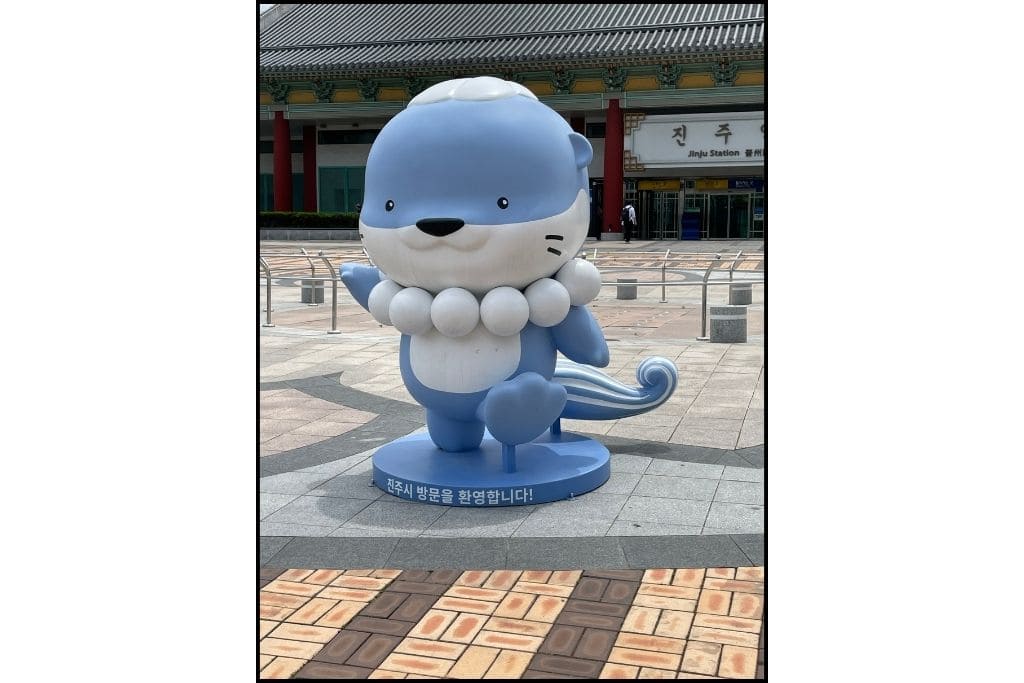
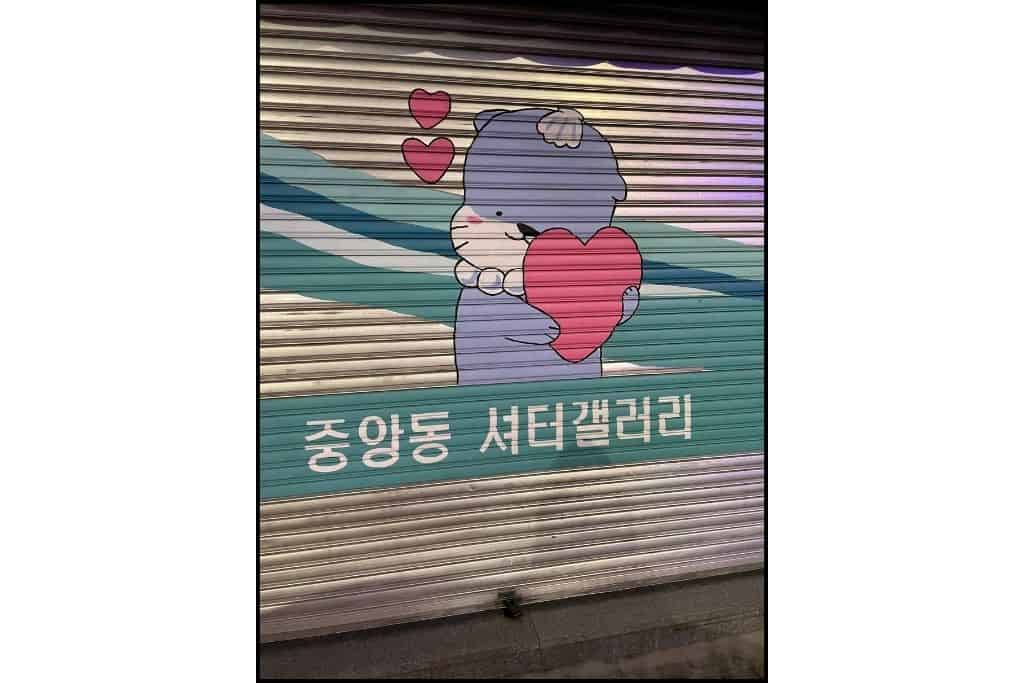
One more thing you need to know before anything else: Jinju has a sea otter mascot named Hamo, who wears a pearl necklace and is the cutest mascot I have seen in all of Korea.
I, of course, bought a stuffie. No regrets.
If you’re looking for things to do in Jinju, especially during festival season, this guide covers the highlights, what’s actually worth your time, and how to plan your visit.
TL;DR
Jinju is one of Korea’s most underrated cities, but if you visit in October, it completely transforms during the Jinju Namgang Yudeung Festival, when lanterns fill the Nam River and fortress grounds.
It’s an easy trip from Busan and one of the best side trips you can add.
Why go:
- Best in October: Lantern Festival + multiple events happening at once
- Top sights: Jinjuseong Fortress and Chokseokru Pavilion right on the river
- Worth it: Great food, relaxing jjimjilbang at Hotel DongBang, and fewer crowds than major cities
Things To Do In Jinju
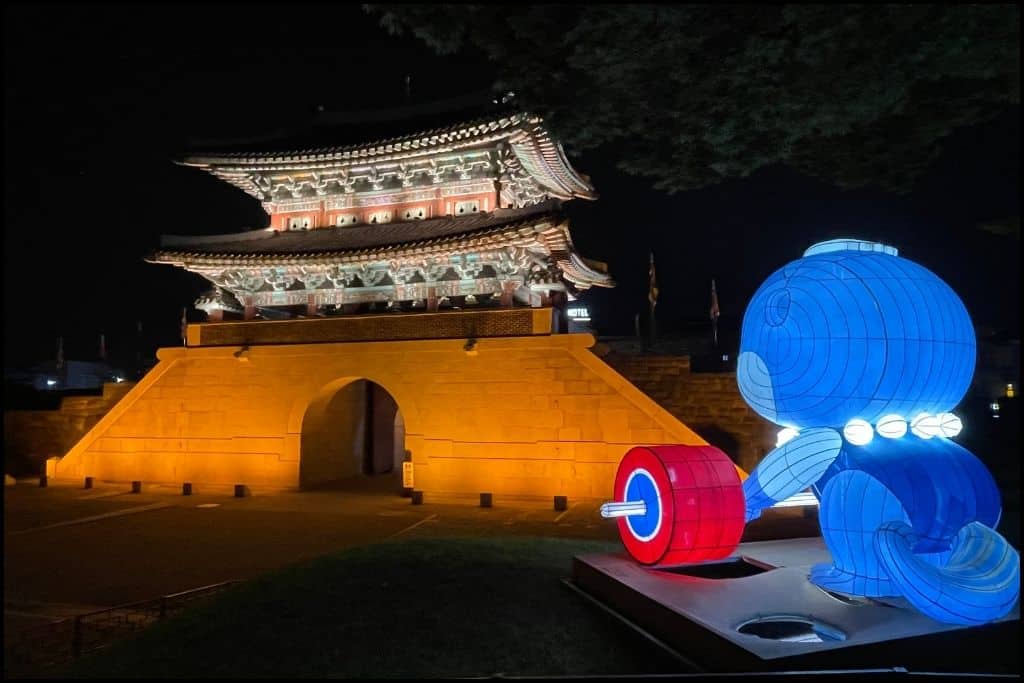
Jinjuseong Fortress: History and Lantern Festival Grounds
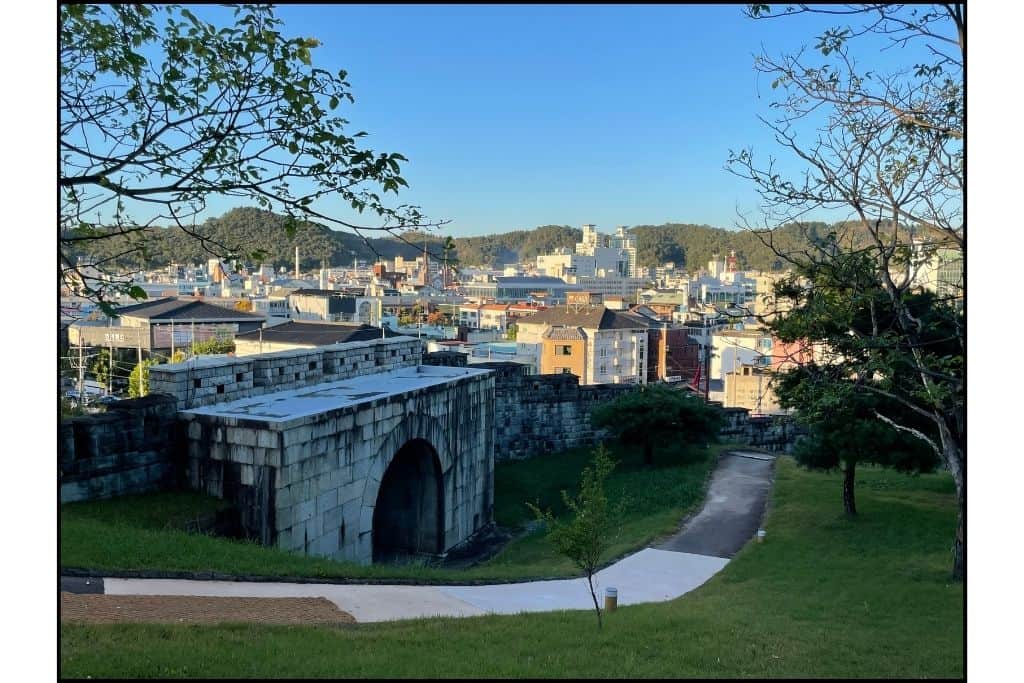
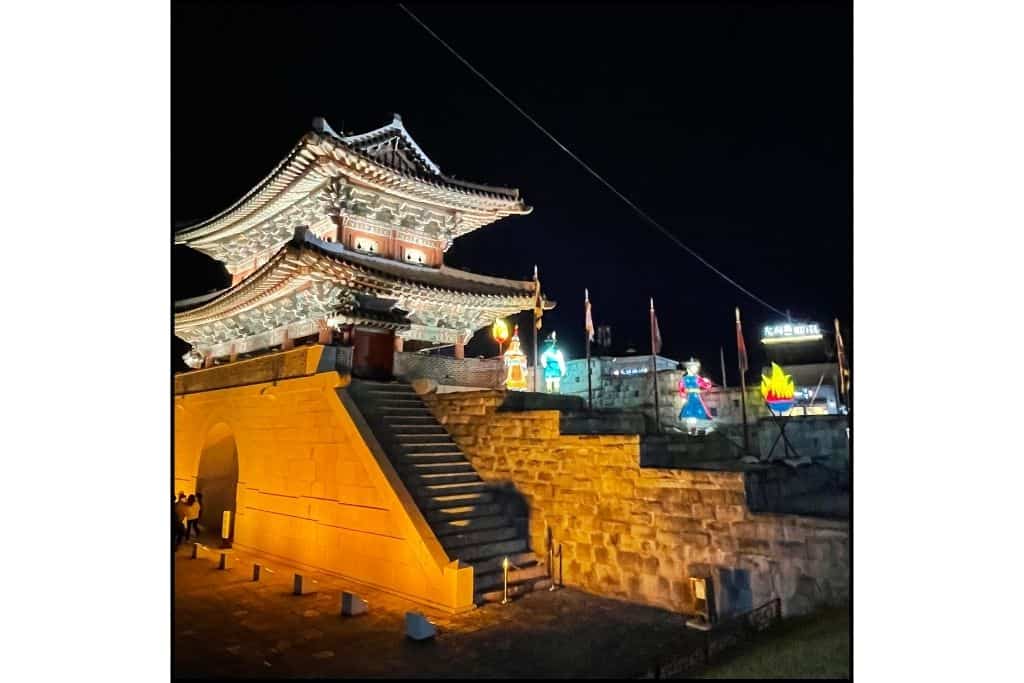
Jinjuseong Fortress is the heart of Jinju and the first place you should head when you arrive.
Built during the early Joseon Dynasty, it served as a critical military stronghold during the Imjin War, and that history is still very present as you walk the restored walls.
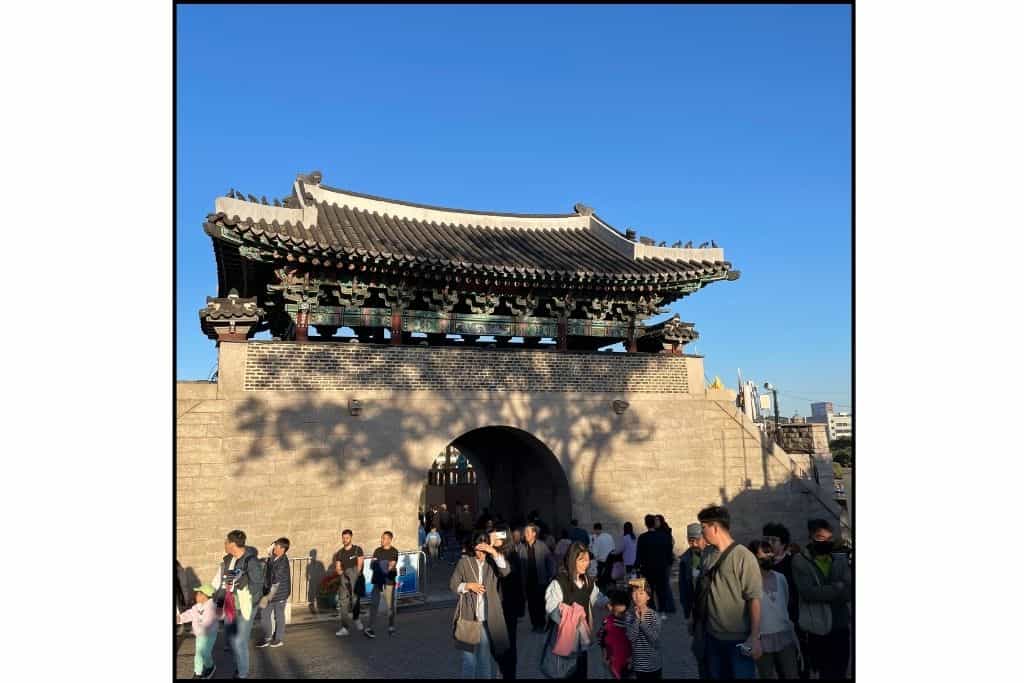
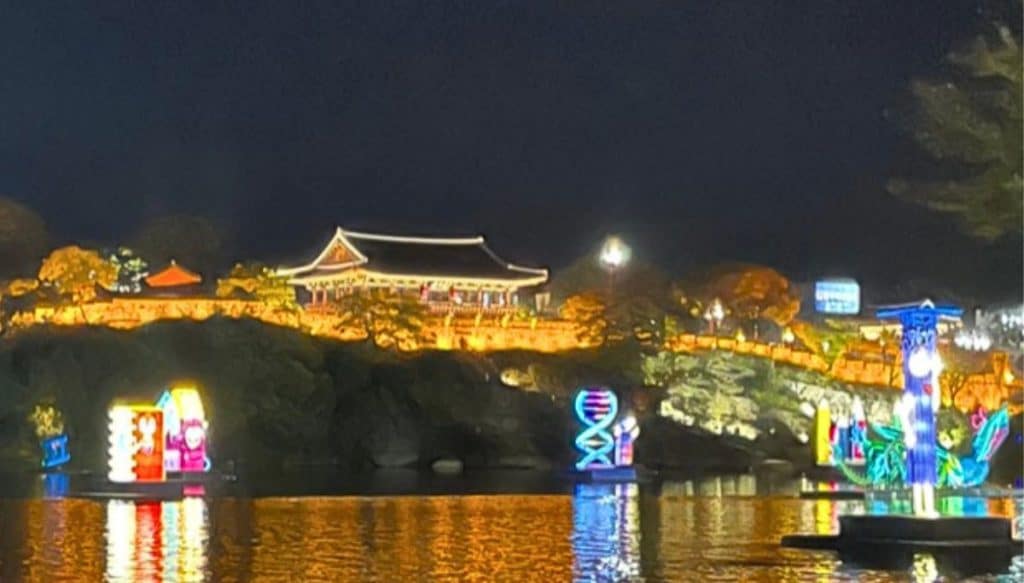
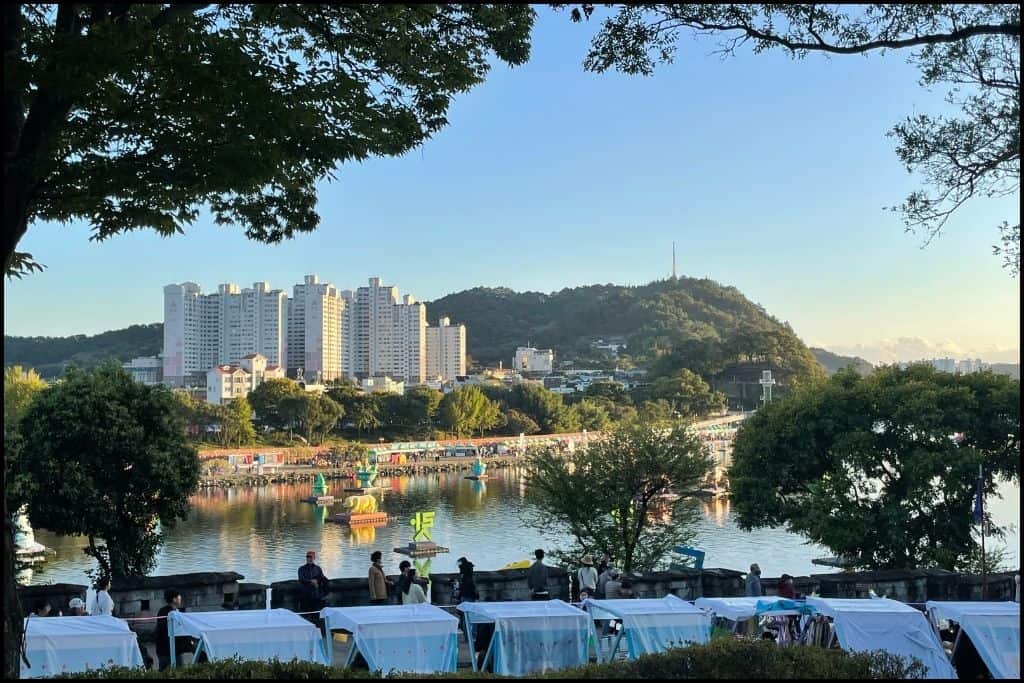
I visited during the Lantern Festival, and the fortress grounds were massive and genuinely impressive.
The views over the Nam River from the top are worth the visit on their own.
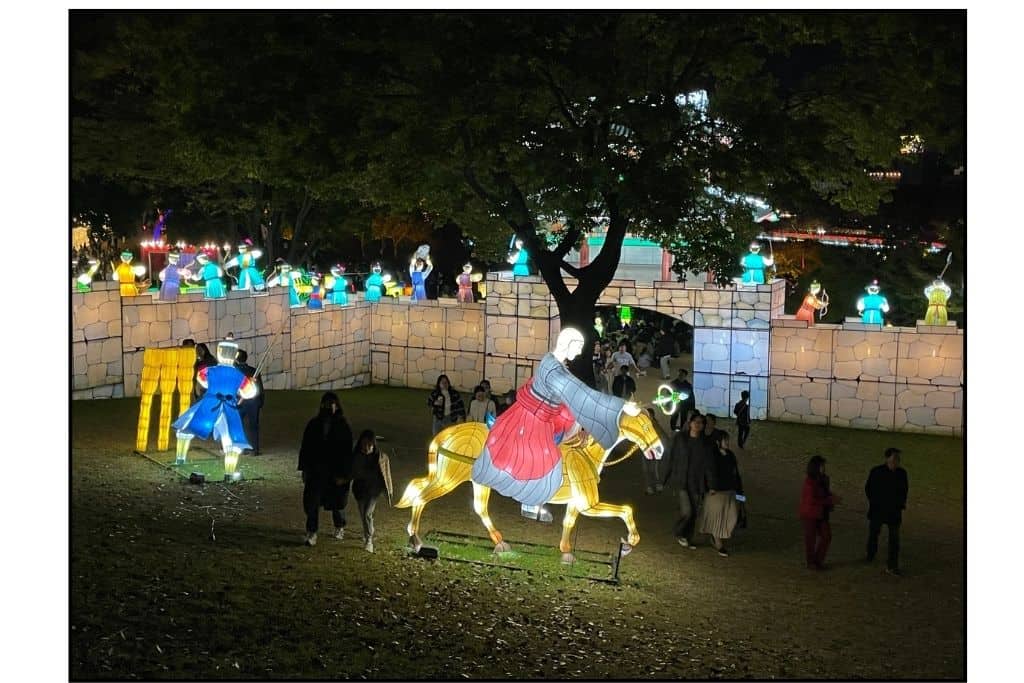
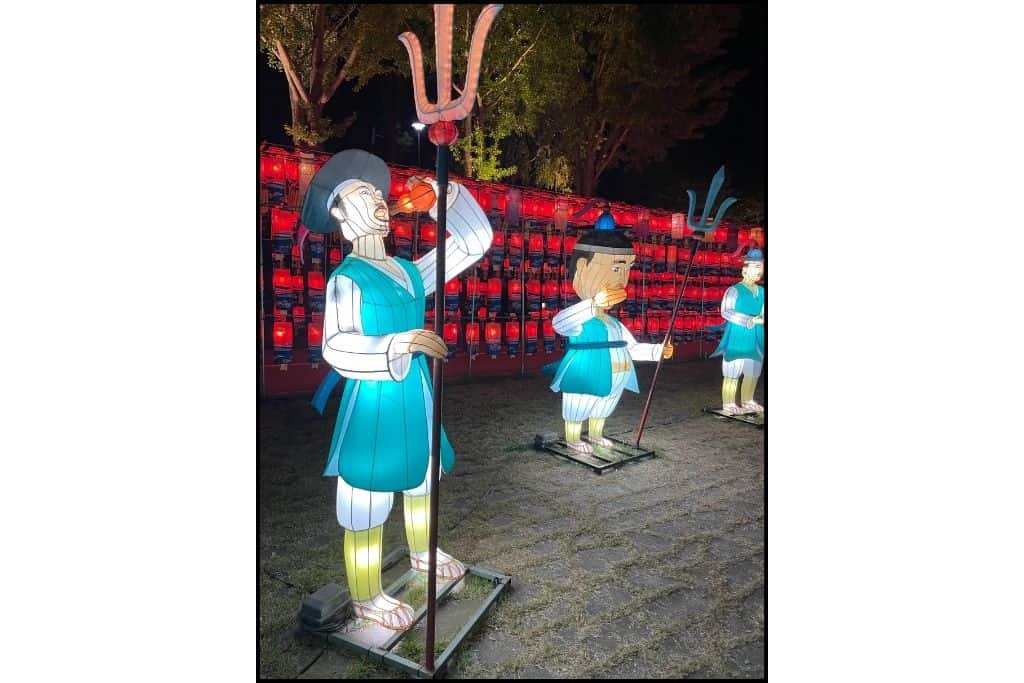
During the festival, the entire grounds come alive with lanterns, food stalls, and performances.
I didn’t make it into the museum this trip, but I’d budget at least a couple of hours here.
Entry is free. Plan for at least an hour, more if you want to explore the museum inside.
Staying connected in Korea is a lot easier with a SIM card or eSim
👉 Grab your SKT Unlimited Local Data & Voice Calls Sim Airport Pick up HERE
OR
Grab your Korea eSIM with SKT Unlimited LTE data + Voice
Chokseokru Pavilion
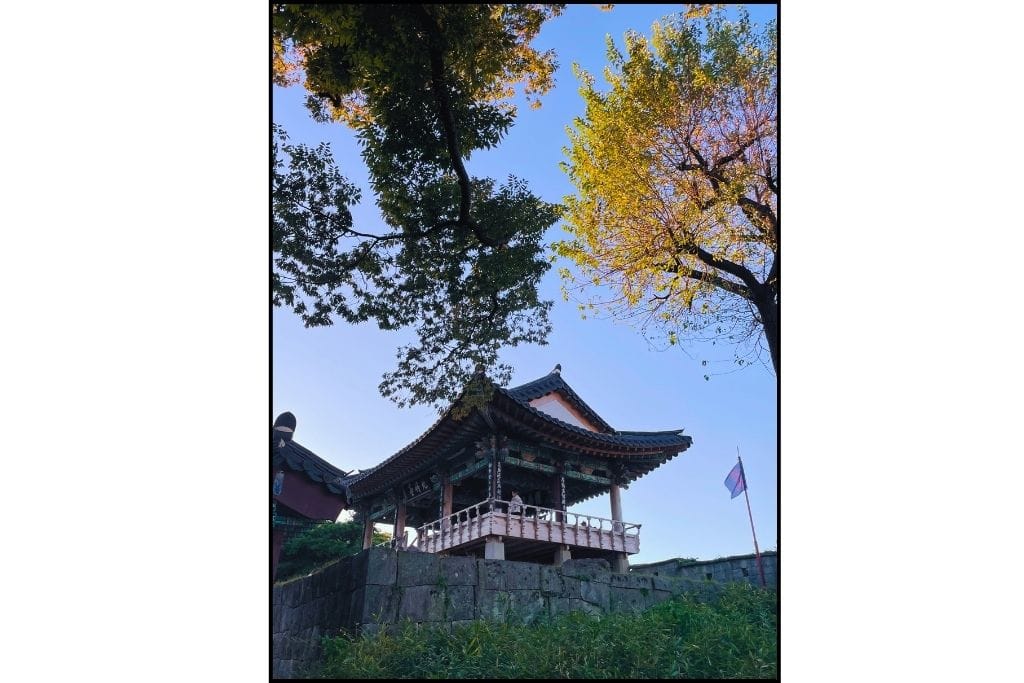
Chokseokru Pavilion sits on a rocky cliff inside the fortress grounds, directly overlooking the Nam River.
It made CNN’s list of 50 beautiful places to visit in South Korea, and the view over the river makes that easy to believe.
Built in the Goryeo Dynasty, it served as a military command post during the Imjin War and is where Jinju’s most famous legend unfolded.
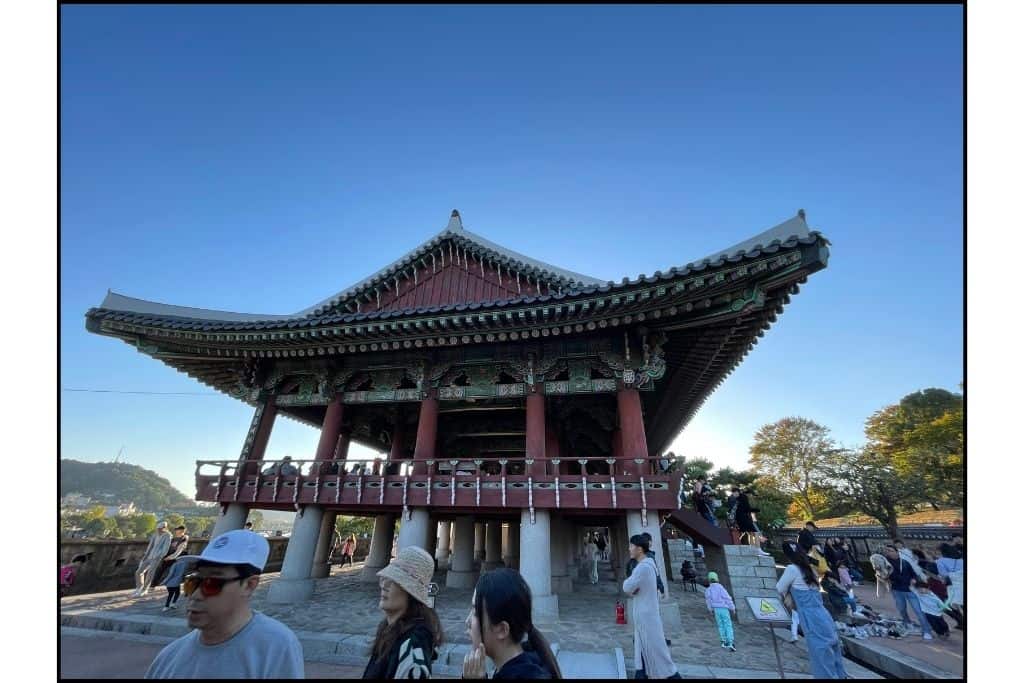
Nongae, a gisaeng (female entertainer), lured a Japanese general to the cliff’s edge, embraced him, locked her fingers around him so neither could escape, and jumped into the river below, taking his life and her own.
The rock where she leapt is still there, marked as Uiam, the Rock of Righteousness.
Her story is celebrated every May at the Nongae Festival, held right here at the fortress.
Learn more about Chokseokru Pavilion and the legend of Nongae on Visit Korea.
Jinju National Museum
The Jinju National Museum sits inside the fortress grounds and focuses almost entirely on the Imjin War.
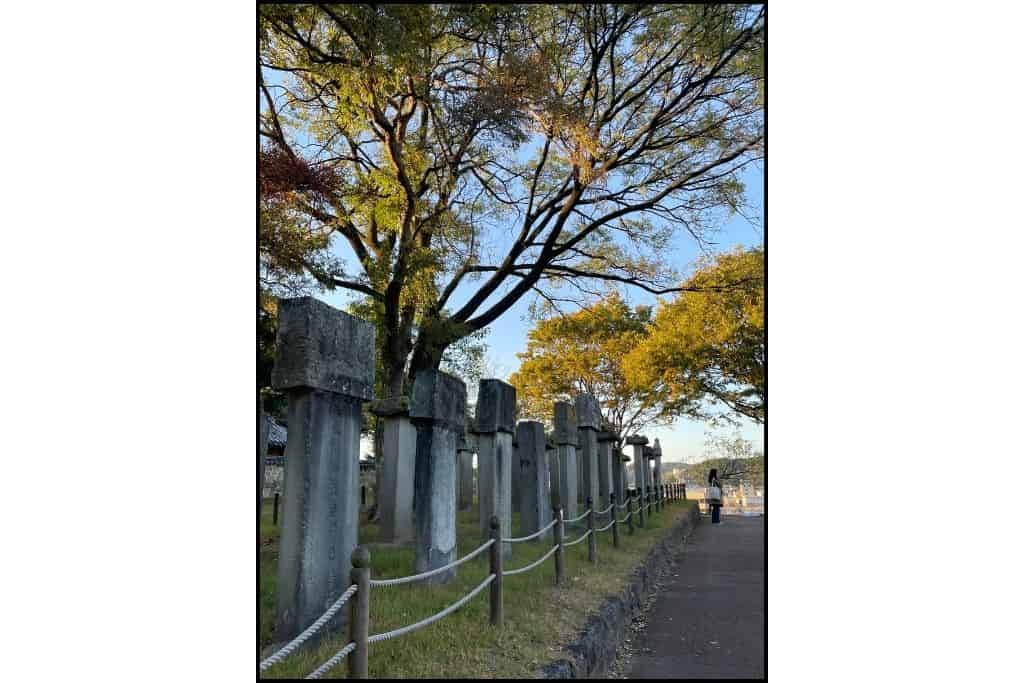
Exhibits cover military artifacts, ancient weapons, and the story of Jinju’s role in Korea’s defense. I didn’t make it inside on this trip, but it’s on my list for next time.
Gyeongsangnam-do Arboretum
Located just outside the city center, Gyeongsangnam-do Arboretum is worth adding to your itinerary if you have extra time in Jinju.
It covers a large area with themed gardens, walking trails, and seasonal events.
I haven’t visited yet, but it looks like a solid half-day option if you want something quieter and more nature-focused outside the city center.
Check the Gyeongsangnam-do Arboretum website for current events.
Jinju Railbike
Jinju Railbike lets you pedal along former railway tracks with views of the countryside and river.
It’s a popular option for families and runs year-round, with spring and autumn being the best seasons for scenery.
I haven’t done this one yet, but it comes up a lot as a fun, scenic activity if you have extra time in Jinju.
Jinju Jungang and Nongae Markets
Jinju Jungang Market and Nongae Market sit right next to each other and are worth a wander if you have time.
Jungang is the busier of the two, with food stalls selling hotteok, tteokbokki, and grilled seafood.
It’s also a good spot to try Jinju’s local specialties: beef tartare bibimbap and Jinju naengmyeon (cold noodles), both of which the city is well known for.
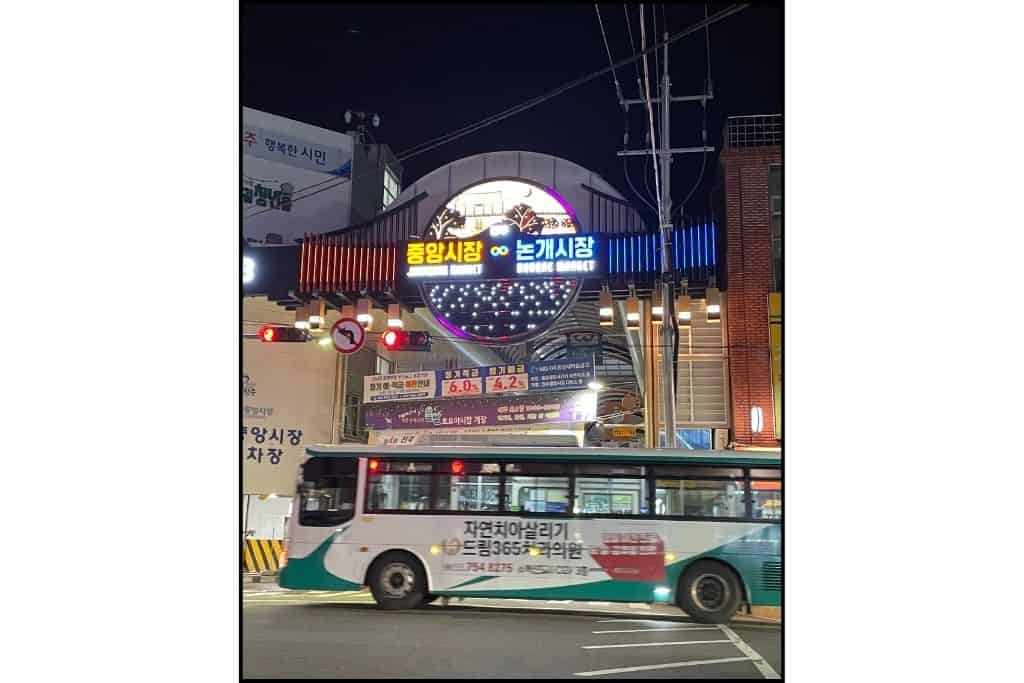
Nongae Market next door is quieter and more local in feel.
Note that both markets are closed on the first and third Sunday of each month.
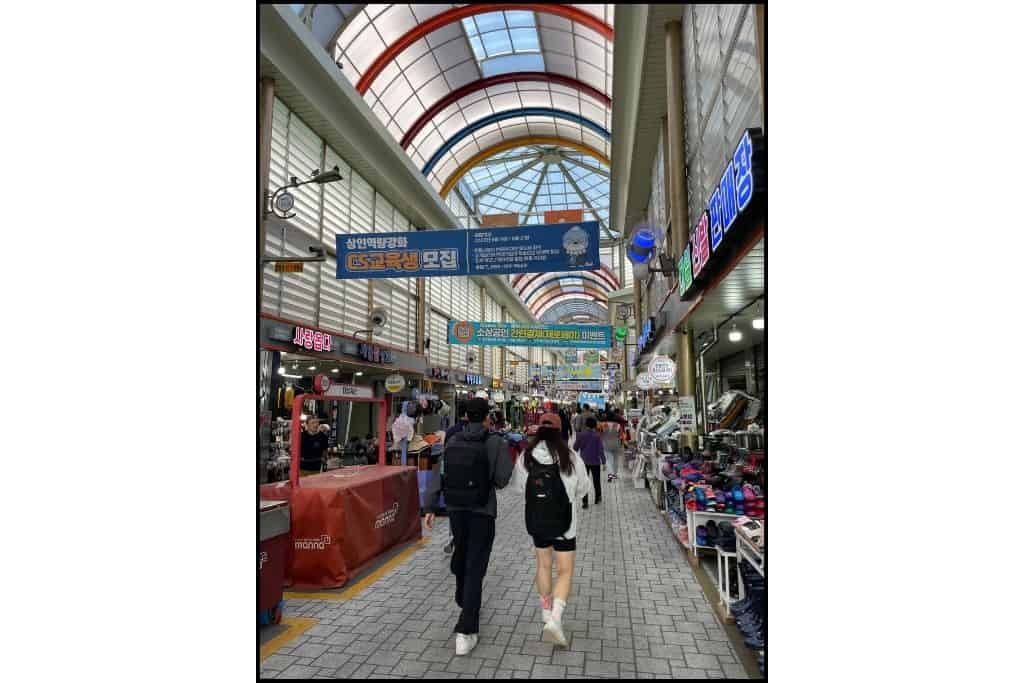
Honestly, if you’ve visited traditional markets elsewhere in Korea you’ll know what to expect, but they’re a good way to stretch your legs and grab a local dish.
Jimjibang at Hotel DongBang
If you need to decompress after a day of sightseeing, Hotel DongBang has a public jjimjilbang with several saunas, hot baths, a jet bath, and a cold plunge.
I always stop by when I’m in Jinju. It’s rarely busy, which makes it easy to actually relax.
Check availability and rates for Hotel DongBang
Festival Highlights
Jinju Namgang Yudeung Festival
- Lantern Displays: Elaborate lanterns line the Nam River and fortress grounds, each based on cultural and historical themes.
- Workshops and Performances: Lantern-making workshops and traditional Korean performances run throughout the festival.
- Fireworks and Drone Show: The closing night features a drone show followed by fireworks over the river.
- When: Usually held in October to coincide with the full moon. This is Jinju’s biggest annual event.
Gaecheon Art Festival
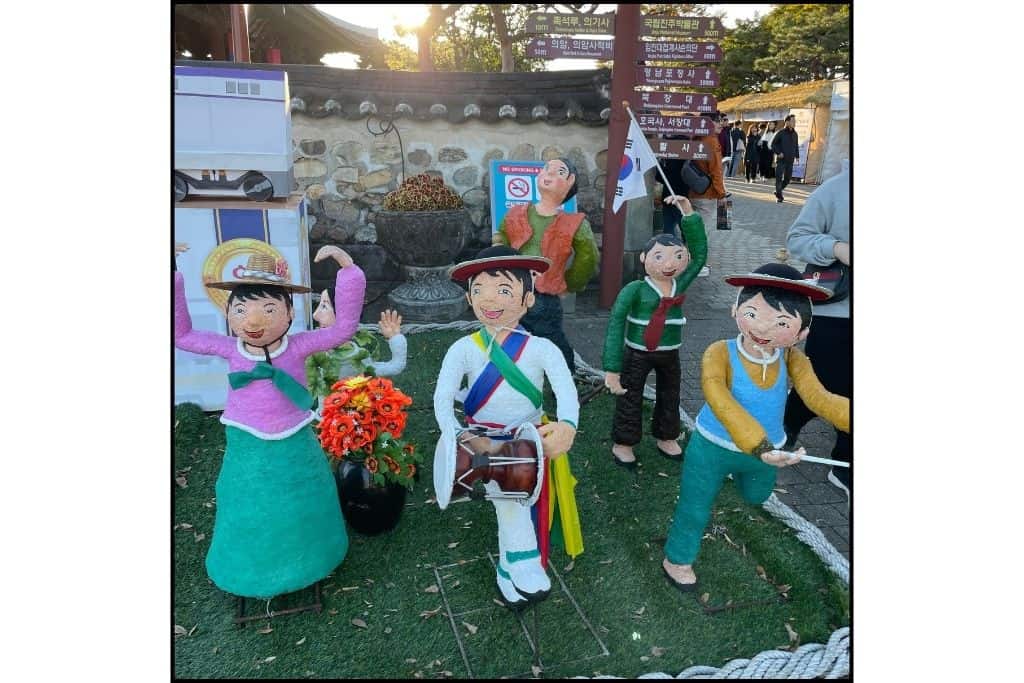
- Art Exhibits: Public art installations and exhibitions mixing traditional and contemporary work.
- Workshops and Performances: Art workshops, cultural performances, and live music throughout the festival.
- Parades: Street parades celebrating Jinju’s local arts scene.
- When: Typically held in October, overlapping with the Lantern Festival.
Korea Drama Festival
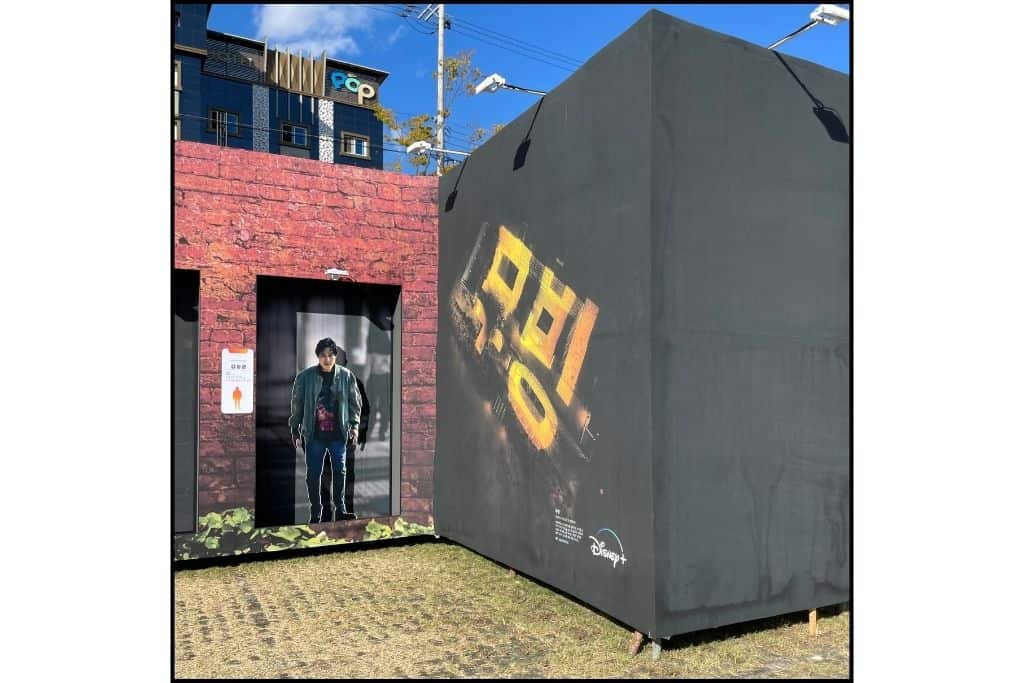
- Celebrity Appearances: K-drama stars attend fan events and meet-and-greets.
- Drama Screenings: Screenings of popular K-dramas and exclusive previews.
- Interactive Exhibits: K-drama set replicas for photos and fan experiences.
- When: Usually held in October, coinciding with the Lantern Festival.
Jinju Nongae Festival
- Historical Reenactments: A reenactment of Nongae’s legendary act of sacrifice at Uiam rock, with ceremonies honoring her bravery.
- Traditional Performances: Korean music, dance, and cultural performances.
- Cultural Exhibits: Exhibits covering Jinju’s history during the Imjin War.
- When: Held in May to honor Nongae and the 70,000 Koreans who died in the Battle of Jinju Castle.
Jinju Lotus Lantern Festival
- Lantern Displays: Lanterns illuminate the Nam River and Jinjuseong Fortress grounds in celebration of Buddha’s Birthday.
- When: Typically held in late spring or early summer, aligned with the Buddhist calendar.
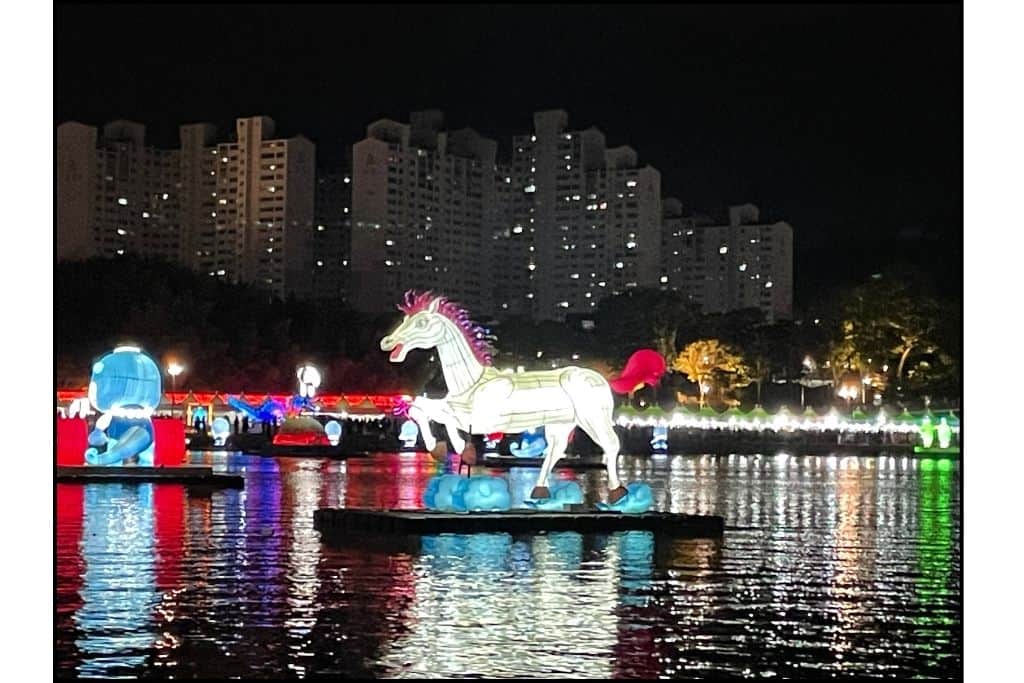
Visiting the Jinju Namgang Yudeung Festival
The Jinju Namgang Yudeung Festival is worth planning your entire Jinju trip around. Entry is around 10,000 won (verify before you go).
Lanterns line both sides of the river and spread throughout the fortress grounds, so there’s a lot of ground to cover.
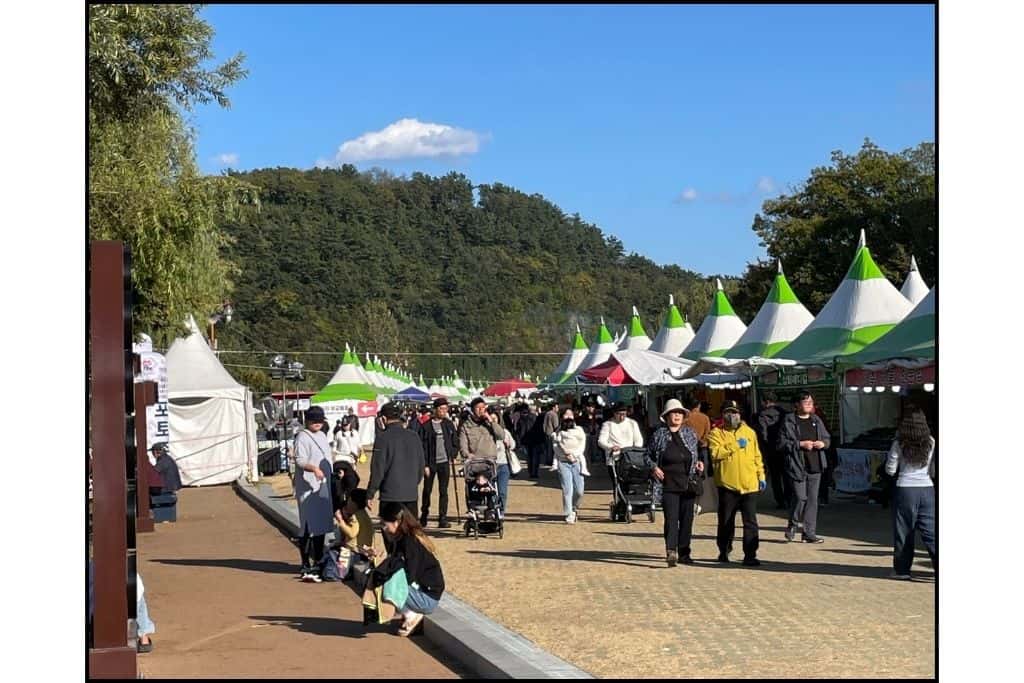
The food stall area is large, so come hungry.
I planned to stay two nights and ended up staying three when I heard there would be fireworks on the closing night.
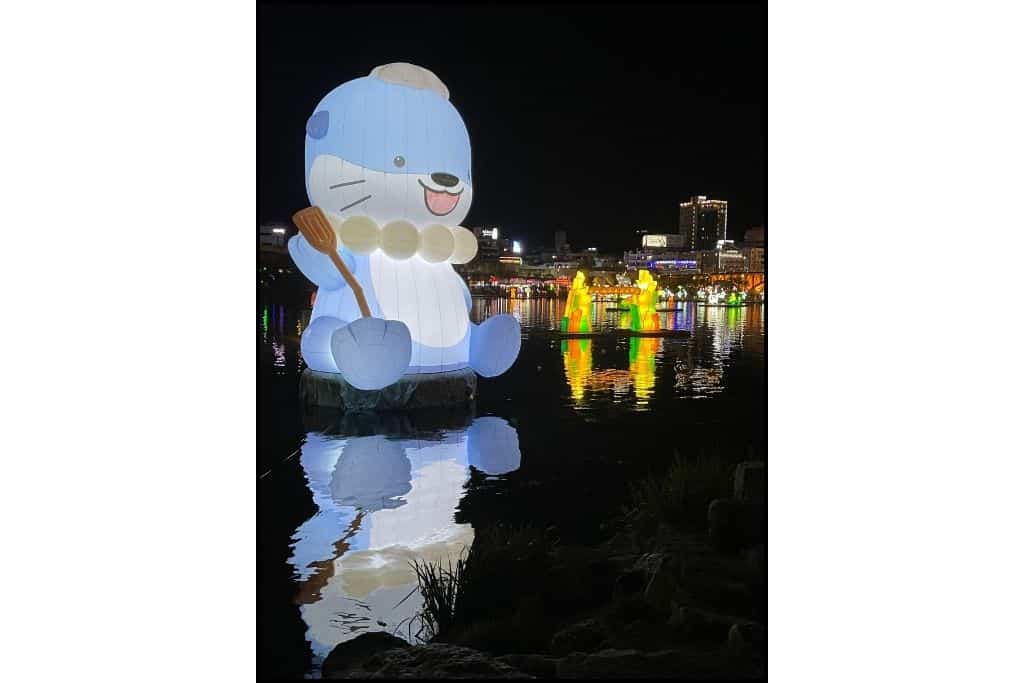
The drone show followed by a small but charming fireworks display over the river was the right way to end it.
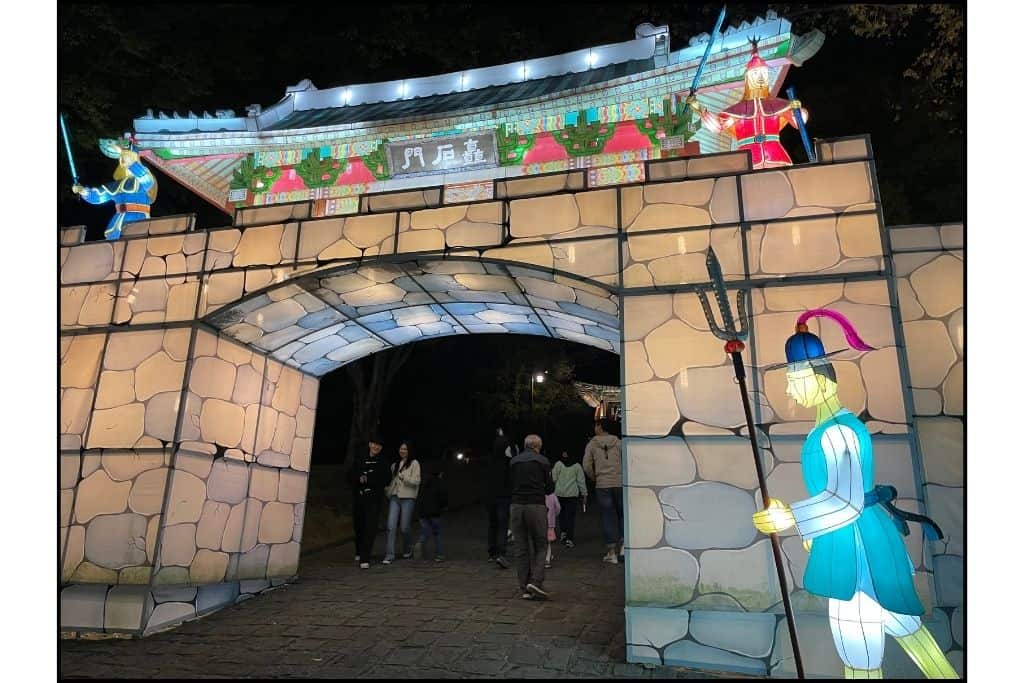
How To Get To Jinju
How to get to Jinju from Seoul
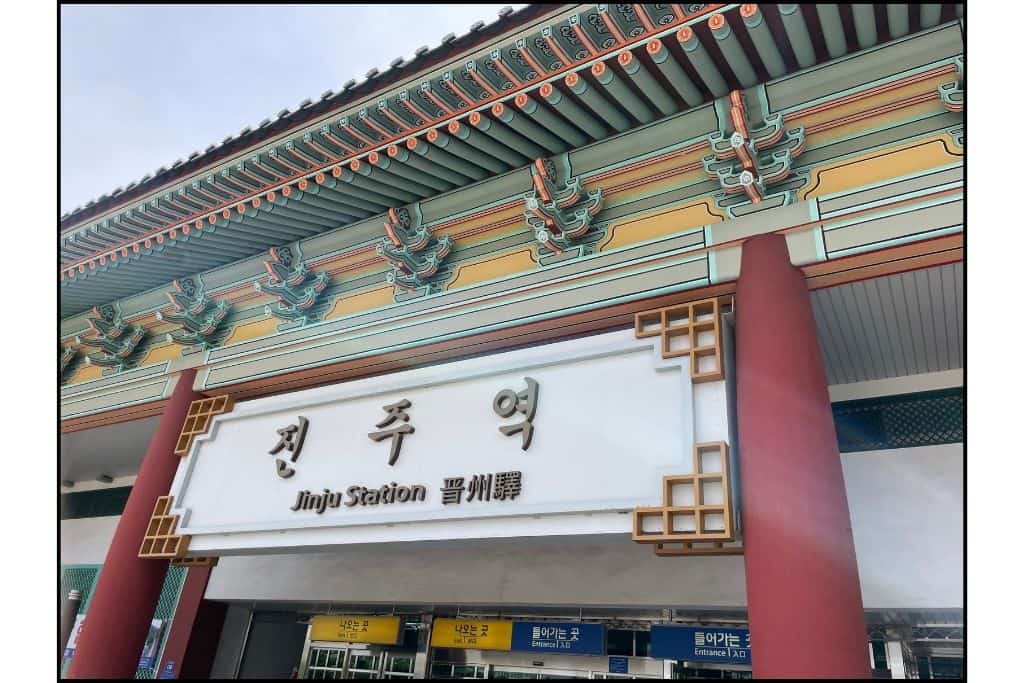
- By KTX: Take the KTX from Seoul Station to Jinju Station, around 2 hours and 45 minutes.
- By Bus: Buses run frequently from Seoul Express Bus Terminal to Jinju Express Bus Terminal; the trip takes around 4 hours.
- By Car: Approximately 4 hours, depending on traffic.
How to get to Jinju from Busan
- By Bus: The most convenient option. Take an intercity bus from Busan Seobu Intercity Bus Terminal in Sasang, around 1 hour and 40 minutes.
- By Train: Mugunghwa or SRT trains run from Busan Station to Jinju Station, around 2 hours.
- By Car: Approximately 1 hour to 1.5 hours, depending on traffic.
Need KTX Train Tickets? 👉 Book your tickets here to reserve your seat in advance with Trip.com.
Where To Stay in Jinju
With so much to see and do in Jinju, staying near the river puts you within walking distance of the fortress, markets, and festival grounds.
Here are some great hotel options within walking distance of the fortress, markets, and more!
📍 Golden Tulip Essential Namgang
A mid-range hotel right on the river, convenient for the fortress and markets.
Check current rates for Golden Tulip Essential Namgang.
📍 Hotel DongBang
A mid-range hotel near the river with a public jjimjilbang on site. A good pick if you want to combine sightseeing with a proper wind-down.
Check current rates for Hotel DongBang.
📍 Jinju Dream Hotel
A budget-friendly option in the city center with easy access to the main attractions.
Check current rates for Jinju Dream Hotel.
How to Get Around While Visiting Jinju
- Walking: The main attractions, including Jinjuseong Fortress, Chokseokru Pavilion, and the Nam River area, are all within walking distance of one another.
- Public Buses: Jinju has a public bus system that covers most tourist attractions, markets, and neighborhoods.
- Taxis: Fares start at around 3,800 won. Use Kakao T to request one easily. Check out my Korea apps guide for more practical travel tools.
- Car: Worth considering if you plan to visit spots outside the city center like the Gyeongsangnam-do Arboretum.
FAQ
Jinju is best known for the Jinju Namgang Yudeung Festival, one of Korea’s largest lantern festivals, and for Jinjuseong Fortress. The city is also home to the legend of Nongae, a gisaeng (female entertainer) who sacrificed her life during the Imjin War by jumping from Chokseokru Pavilion with a Japanese general. The city also has a strong food identity, particularly its beef tartare bibimbap and Jinju naengmyeon.
October is the best time, when the Jinju Namgang Yudeung Festival runs alongside the Korea Drama Festival and Gaecheon Art Festival. If you can only visit once, October is the trip.
Jinju works as a day trip from Busan, but you’ll get more out of it with an overnight stay. Two to three days is ideal, especially during the Lantern Festival. If you’re visiting for the festival, budget at least two nights, three if you want to catch the closing fireworks.
Entry is around 10,000 won, which gives you access to the lantern displays, food stalls, and performances. Verify the current price before you go.
Jinjuseong Fortress and Chokseokru Pavilion are the top priorities. The Jinju National Museum and the markets are worth adding if you have extra time.
Yes. The markets are a good spot for street food classics like tteokbokki and hotteok, and Jinju has its own regional specialties worth trying: beef tartare bibimbap and Jinju naengmyeon (cold noodles).
Yes. Hotel DongBang has a public jjimjilbang open to non-guests, and the Nongae Festival (held in May, verify dates) includes historical reenactments and ceremonies tied to Jinju’s Imjin War history.
Yes. The fortress, Chokseokru Pavilion, markets, and jjimjilbang are all worth the trip on their own. That said, if you can time it for October, the festival takes it to another level.
Conclusion
Jinju surprised me. I came for the Lantern Festival and left wishing I had more time.
The fortress, the Nongae story, the jjimjilbang, the food, it all adds up to a city that deserves more than a quick stop.
It’s close enough to Busan that I keep finding reasons to go back. Next on my list is the Nongae Festival in May.
If you get the chance to go in October, take it.
Planning your Busan trip? Be sure to check out my 3-day Busan itinerary, things to do in Busan guide, and Spa Land Busan guide Plus,book your KTX tickets here through Trip.com, the official 3rd party site, so you’re ready to roll.
Last updated on April 16, 2026