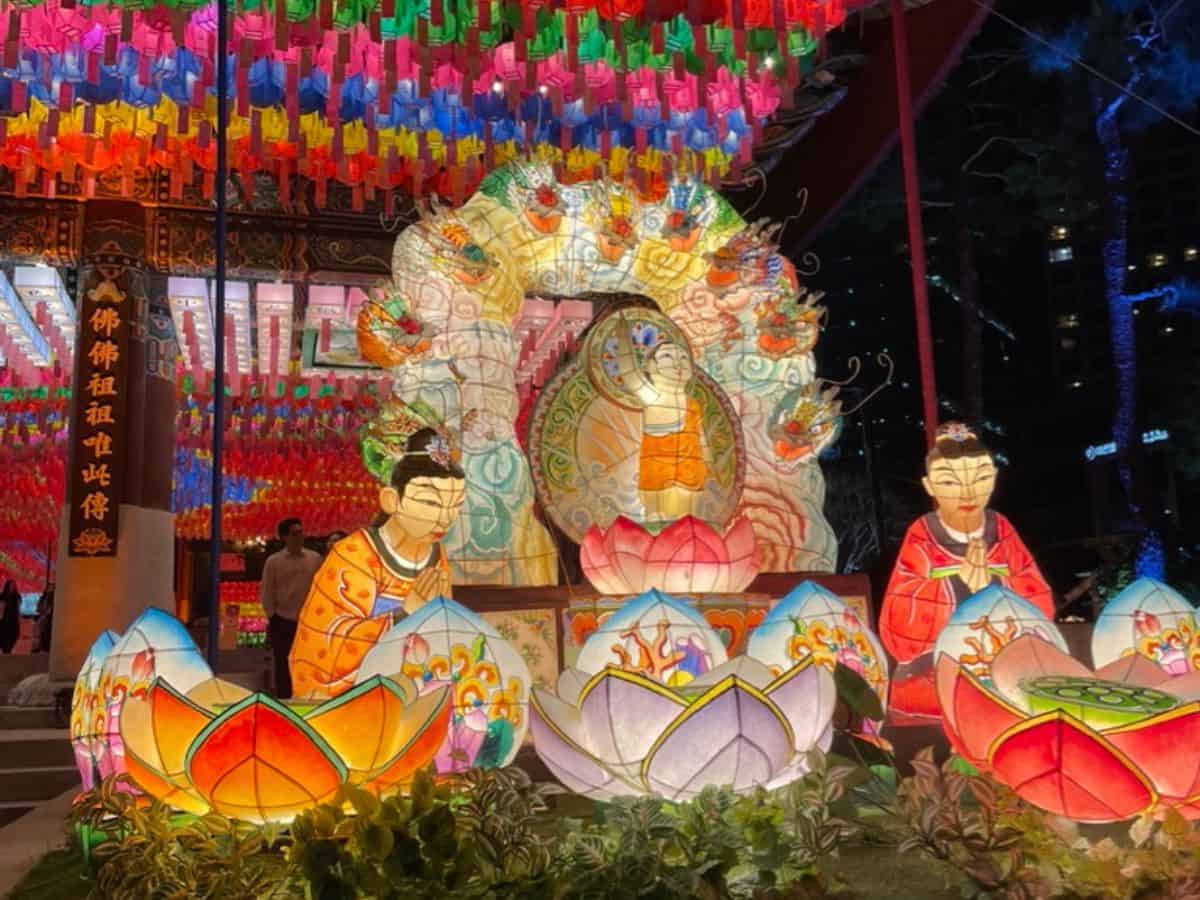

The Seoul Lotus Lantern Festival is one of the city’s most recognizable spring cultural events, held in celebration of Buddha’s Birthday.
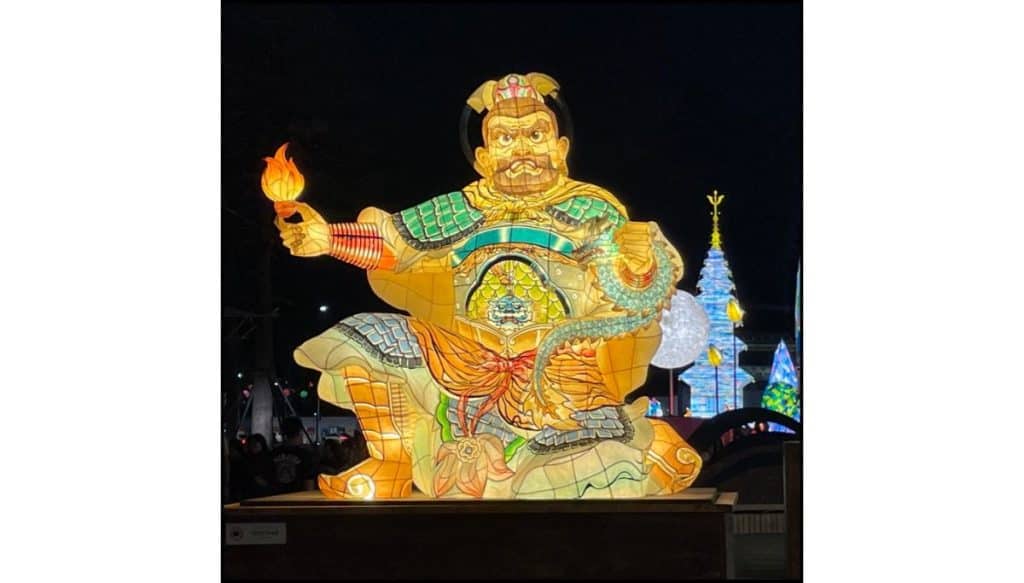
Each year, select temples in Seoul are decorated with colorful hanji paper lanterns, while a large public parade and related events take place in the city center, drawing both locals and visitors.
This guide explains what to expect at the Seoul Lotus Lantern Festival and breaks down the main locations so you can decide where to go and what to prioritize.
TL;DR
- The Seoul Lotus Lantern Festival runs each spring, from late April to mid-May, around Buddha’s Birthday, with lantern displays across the city.
- The main parade takes place in Jongno on a single evening and is lively, crowded, and highly structured.
- Jogyesa and Bonguensa temples host lantern displays and cultural events over multiple days.
- Lanterns are up for several weeks, and you can go day or night.
What Is the Seoul Lotus Lantern Festival?
The Seoul Lotus Lantern Festival is a traditional cultural celebration held in honor of Buddha’s Birthday.
Lanterns have long been used in Korean Buddhist traditions as symbols of light and wisdom.
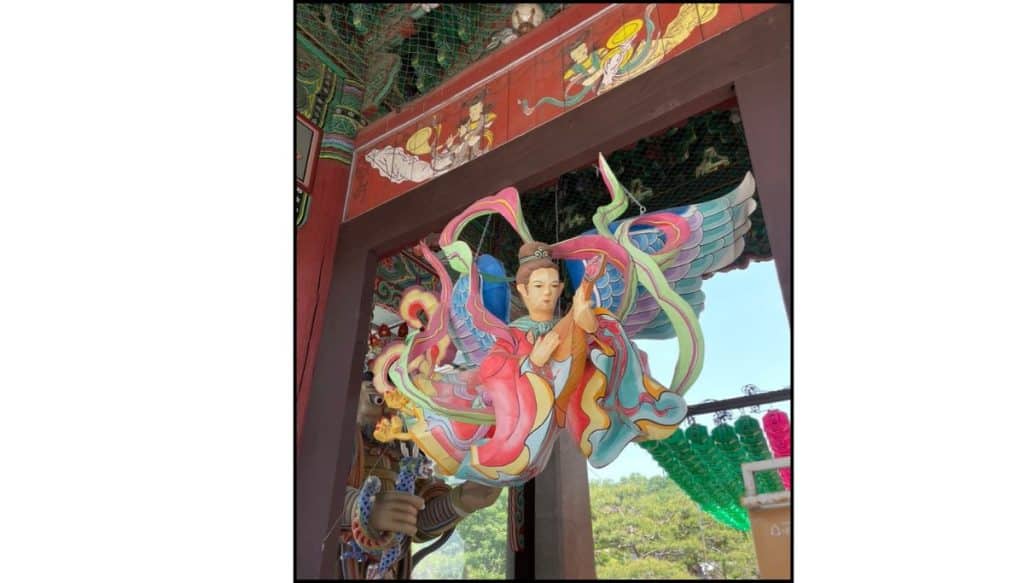
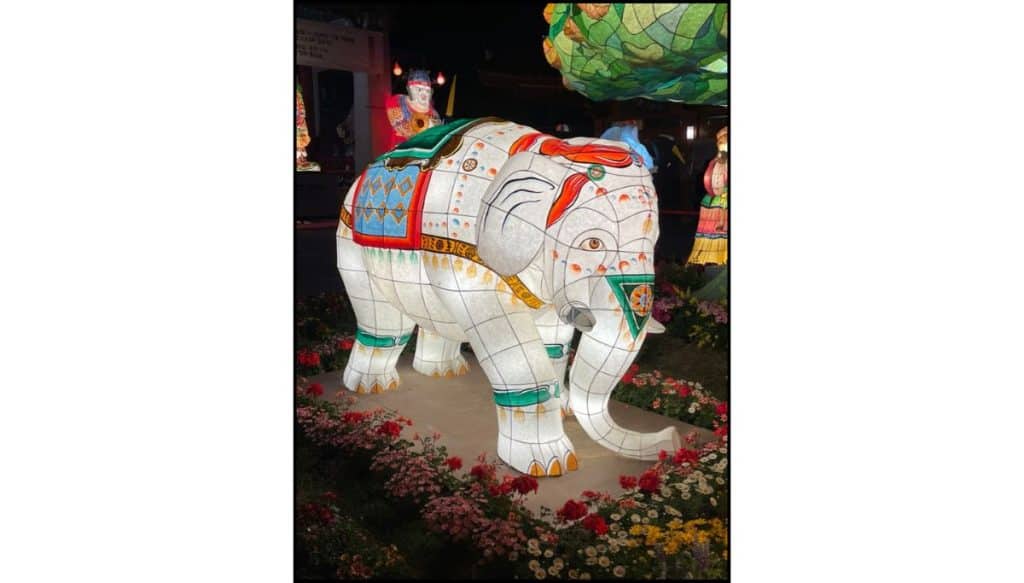
Over time, temple-based lantern offerings expanded into a larger public festival that now includes lantern exhibitions, cultural performances, and an organized lantern parade through central Seoul.
Today, the festival blends religious tradition with public cultural events, making it accessible to both practicing Buddhists and visitors seeking to experience one of Seoul’s most visually distinctive spring festivals.
When Is the Seoul Lotus Lantern Festival?
The Seoul Lotus Lantern Festival is tied to Buddha’s Birthday, which falls on the 8th day of the 4th lunar month.
Because this date follows the lunar calendar, the exact timing changes each year, but it typically falls in late April or May on the standard calendar.
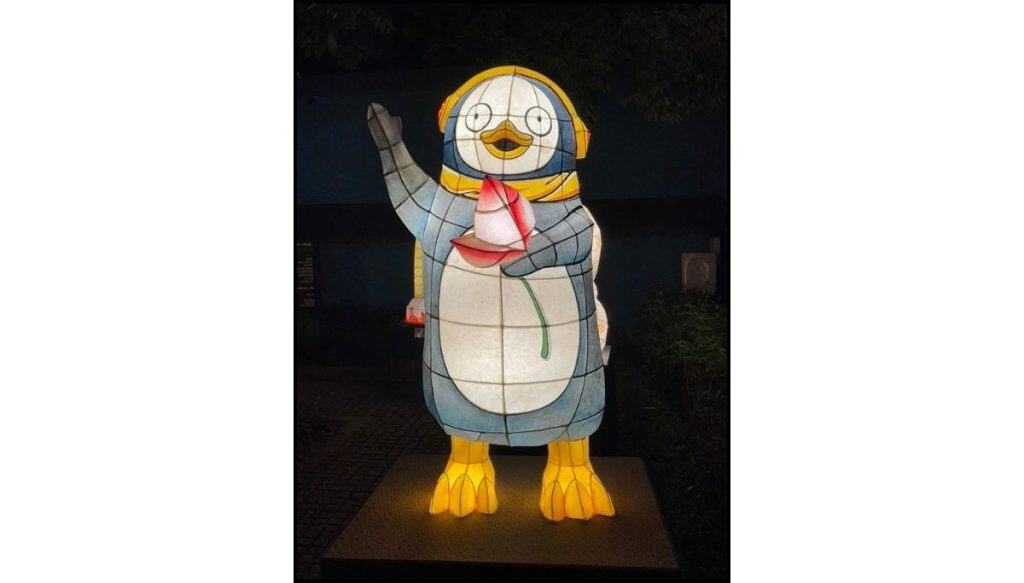
Lantern displays are typically set up several weeks before Buddha’s Birthday, giving visitors a wider window to plan their trip.
You do not need to be in Seoul on the holiday itself to see the lanterns, and visiting earlier in the season can feel noticeably less crowded.
The main lotus lantern parade, however, is held on a specific evening closer to Buddha’s Birthday, with the exact date announced each year.
Travelers who want to experience the parade should plan carefully around that scheduled night.
Jogyesa Temple (Festival Hub)
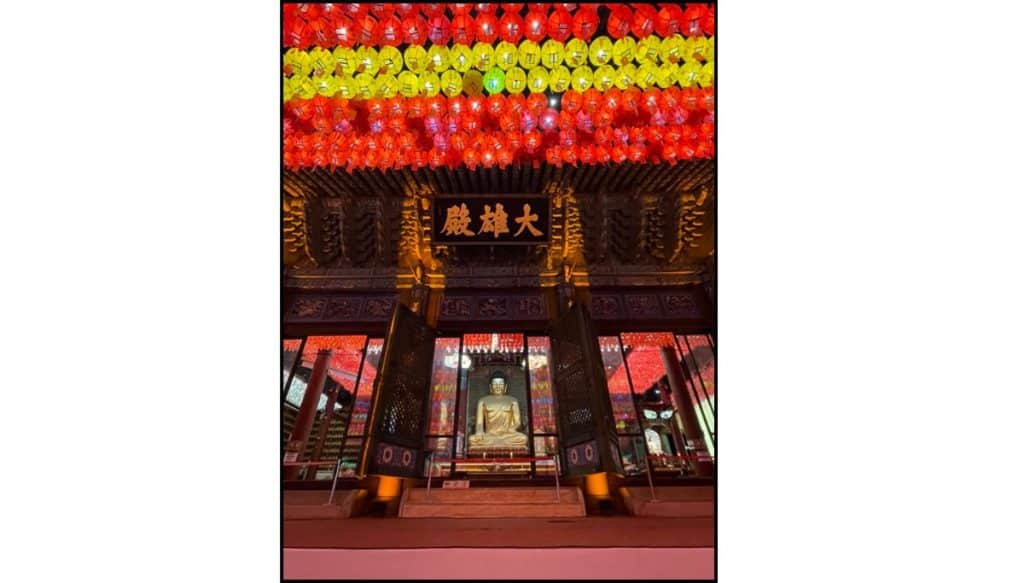
Jogyesa Temple is the main focal point of the Seoul Lotus Lantern Festival and where many visitors begin or end their evening during the festival season.
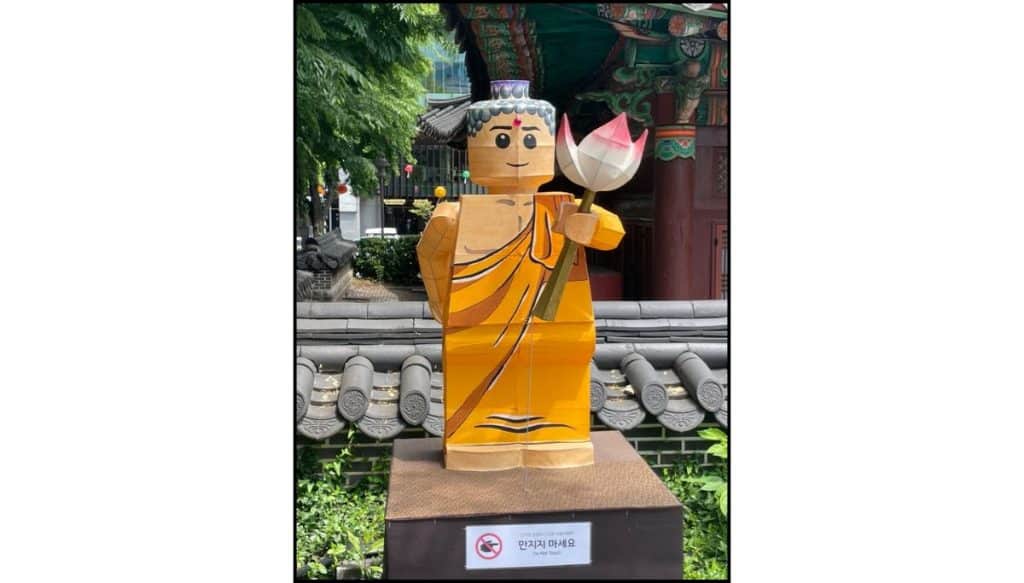
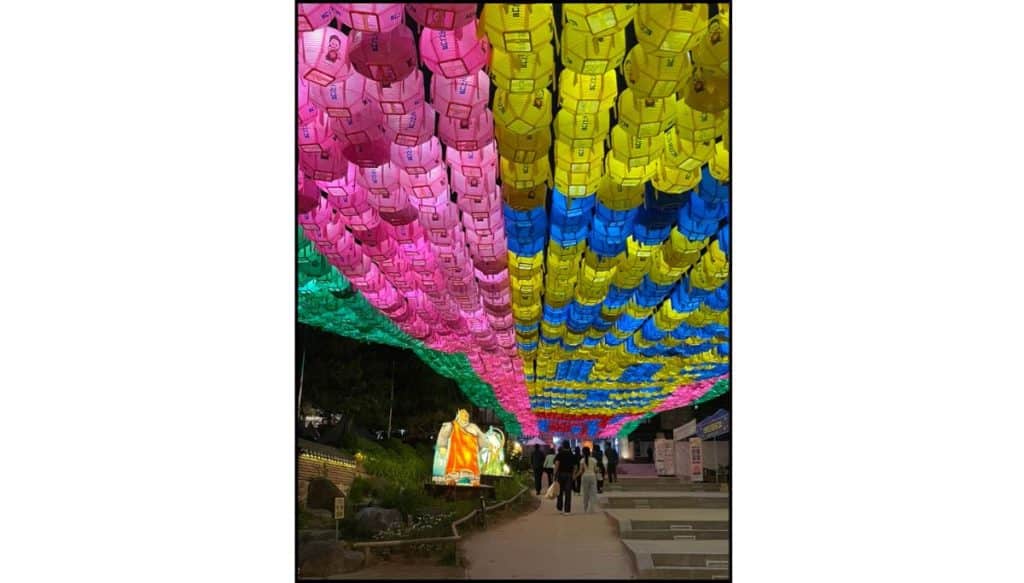
The temple courtyard is filled with rows of hanji paper lanterns, creating one of the most recognizable and photographed festival scenes in the city.
Because Jogyesa is centrally located and easily accessible by subway, it is a convenient stop even for travelers who are not planning their day around festival events.
Lanterns are lit after dark, but the temple grounds are accessible throughout the day, and many visitors stop by in the day or early evening before crowds peak.
Crowds can be heavy closer to Buddha’s Birthday and especially after sunset and on parade night.
That said, Jogyesa is still worth visiting even if you skip the lantern parade, as it offers a concentrated festival atmosphere without requiring you to follow a specific schedule or route.
For travelers short on time or unsure where to focus, Jogyesa provides the most straightforward introduction to the Seoul Lotus Lantern Festival.
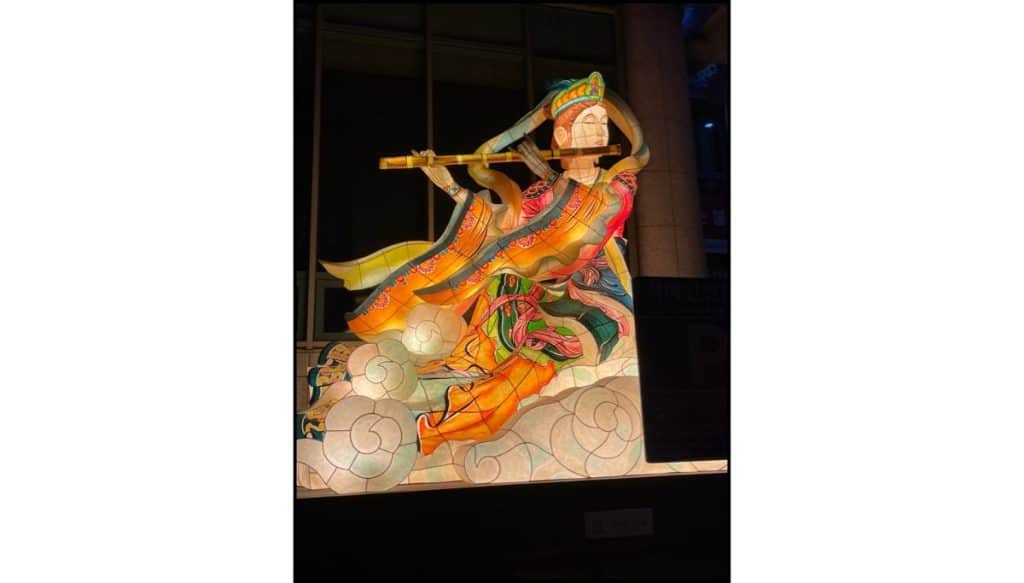
How to Get to Jogyesa Temple
Jogyesa Temple is centrally located in the Jongno District and is easily accessible by subway.
Subway:
Jonggak Station (Line 1), Exit 2
About a 5-minute walk to the temple entrance
Alternative subway option:
Anguk Station (Line 3), Exit 6
About a 10-minute walk
Staying connected in Korea is a lot easier with a SIM card or eSim
👉 Grab your SKT Unlimited Local Data & Voice Calls Sim Airport Pick up HERE
OR
Grab your Korea eSIM with SKT Unlimited LTE data + Voice
Lotus Lantern Parade and Jongno Street Festivities
Lotus Lantern Parade
The Lotus Lantern Parade is a scheduled annual event held in connection with Buddha’s Birthday and is the most structured part of the Seoul Lotus Lantern Festival.
On parade night, participants carry illuminated lanterns through central Seoul, accompanied by traditional music, performances, and organized procession groups.
The parade typically begins near Heunginjimun (Dongdaemun Gate) and moves west through the Jongno area before ending near Jogyesa Temple.
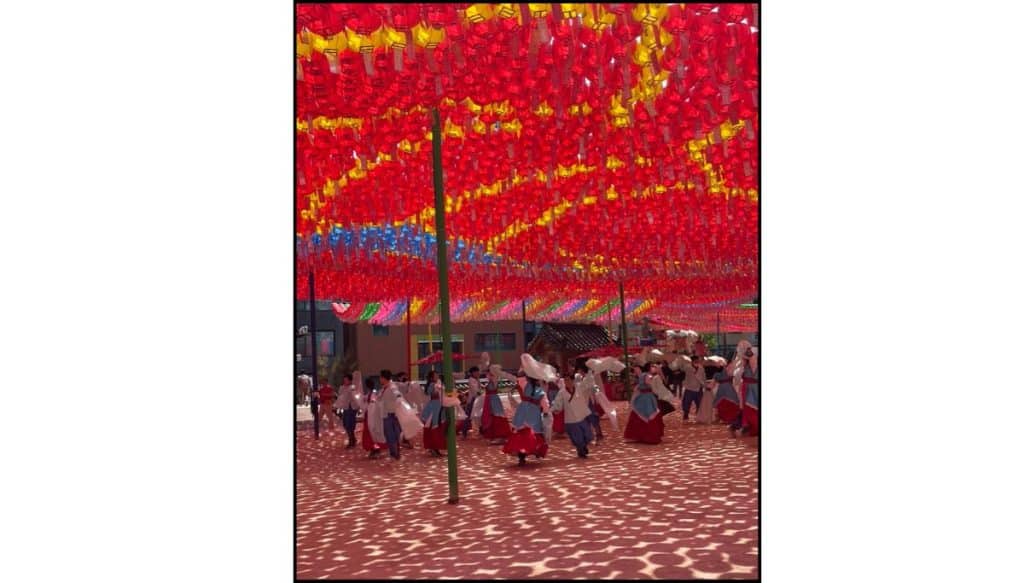
Streets along and around the route are closed to traffic in the evening, and large crowds gather to watch from sidewalks and intersections.
Because the parade takes place on a single scheduled evening near Buddha’s Birthday, crowds are significantly heavier than at temple lantern displays.
The crowb will arrive well in advance to secure viewing spots, often bringing food and planning to stay in place for several hours.
Movement along the parade route is limited once crowds fill in, and nearby subway stations and surrounding streets can become congested late into the evening.
Travelers attending the parade should expect slower transit and plan extra time to return to their accommodations.
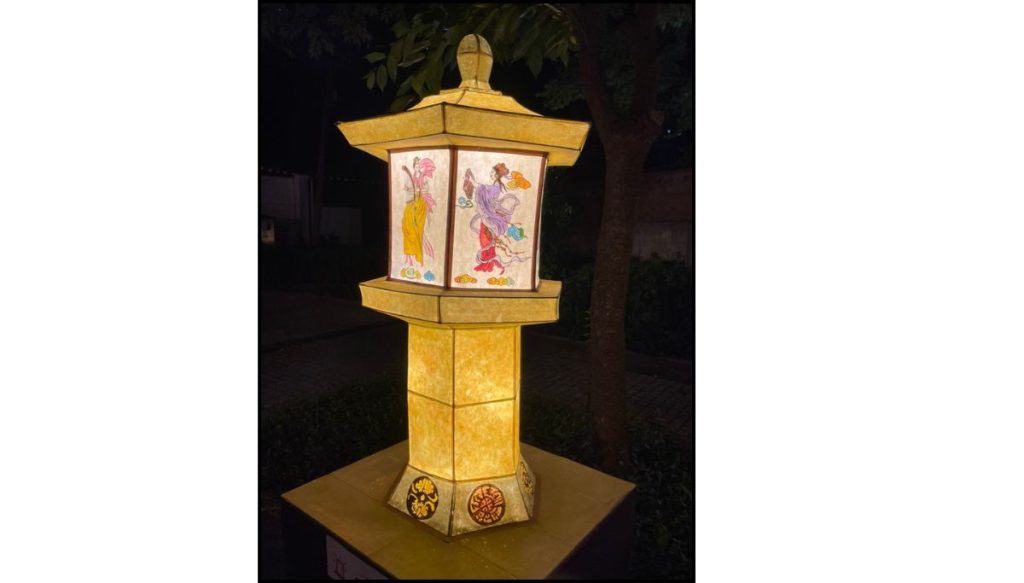
Even if you do not plan to follow the parade itself, the surrounding Jongno streets become part of the festival atmosphere on parade night.
Lanterns, pop-up performances, and dense crowds extend beyond the formal parade route, especially near Jogyesa Temple and Jonggak.
After the parade concludes, a post-parade celebration, Daedong Hanmadang, typically takes place near Jonggak Intersection later in the evening, featuring music, performances, and a lively street-festival atmosphere.
The Seoul Lotus Lantern Parade is scheduled for Saturday May 16 2026, 7:00~9:30pm
Traditional Cultural Events near Jogyesa Temple
Following the parade night, traditional cultural events continue around Jogyesa Temple, drawing steady crowds throughout the day.
Streets in front of the temple are used for cultural performances, demonstrations, and music, and the area remains lively from late morning into the evening.
These events take place on the Sunday after the parade, from approximately 11:00 am to early evening.
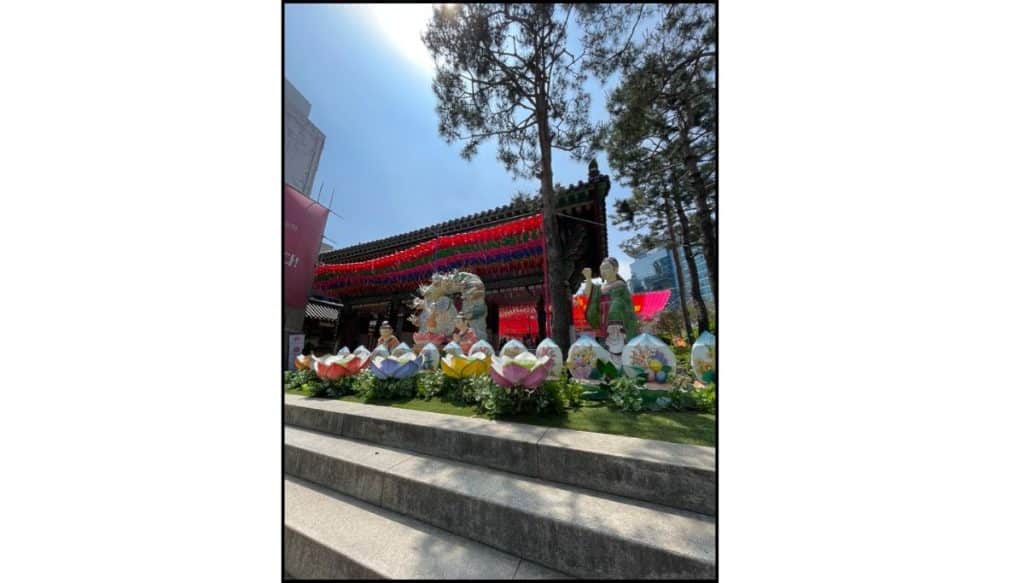
How to Get to the Lotus Lantern Parade and Jongno Street Festivities
On parade night, spectators typically arrive by subway and walk toward Jongno as crowd flow allows.
Common stations in the area include Jonggak, Anguk, and Jongno 3-ga, though specific exits may be blocked or redirected due to crowd control.
Following station signage and on-the-ground guidance is usually more effective than aiming for a specific street corner.
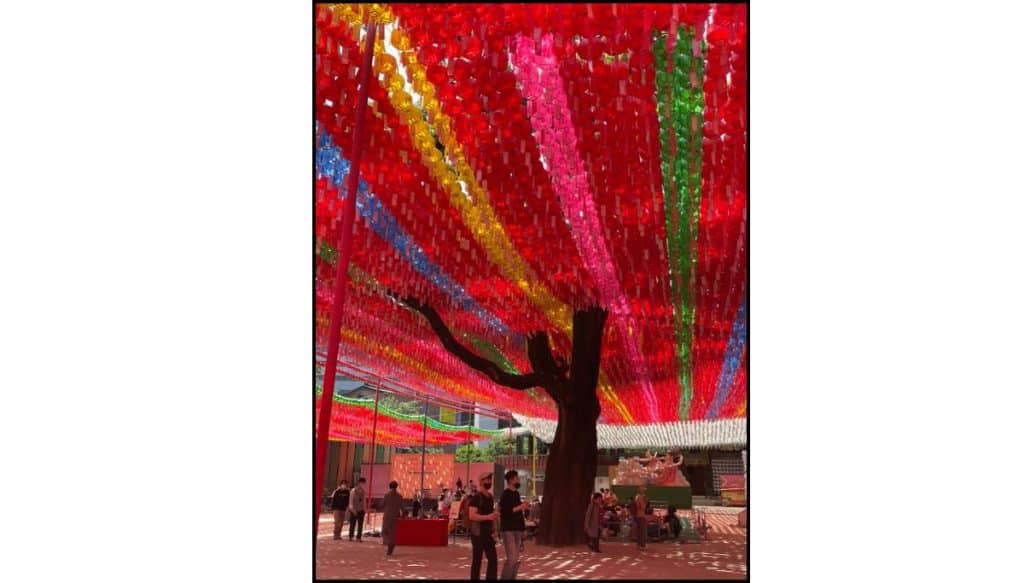
Gwanghwamun Square
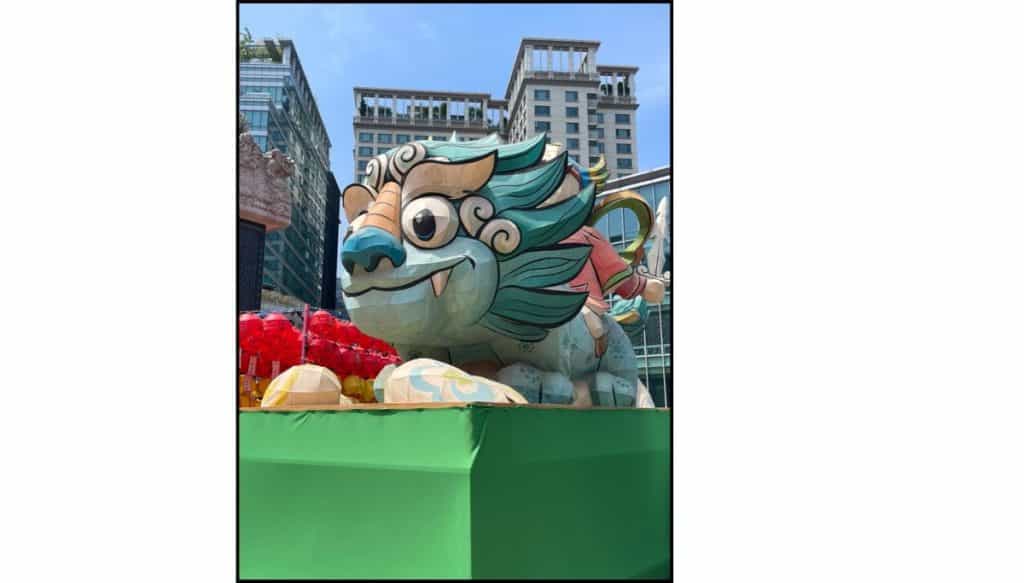
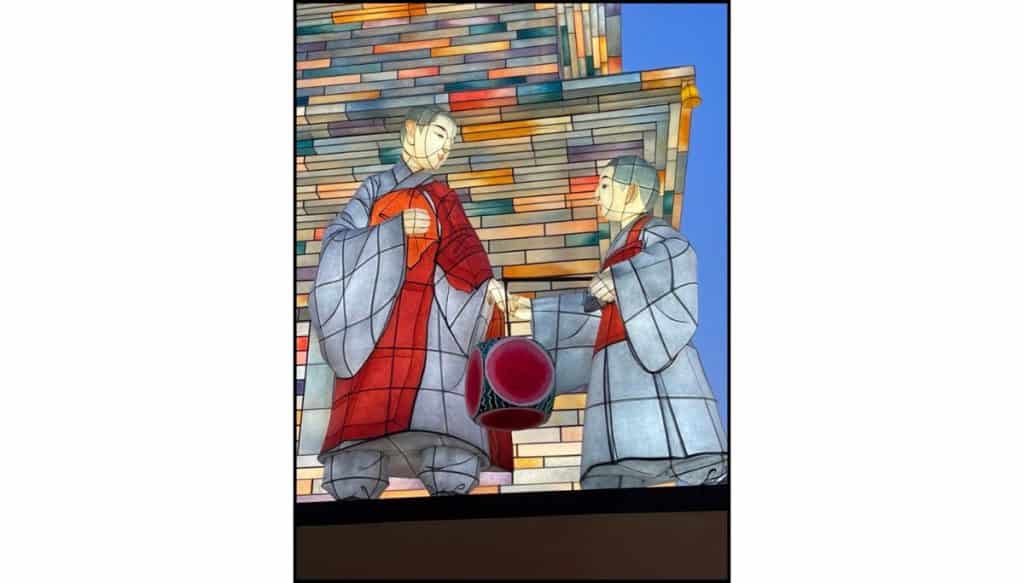
Gwanghwamun Square is one of the easiest places to see lotus lantern displays during the Seoul Lotus Lantern Festival.
Lanterns are set up along the wide public plaza, making this a simple stop that does not require advance planning or a long time commitment.
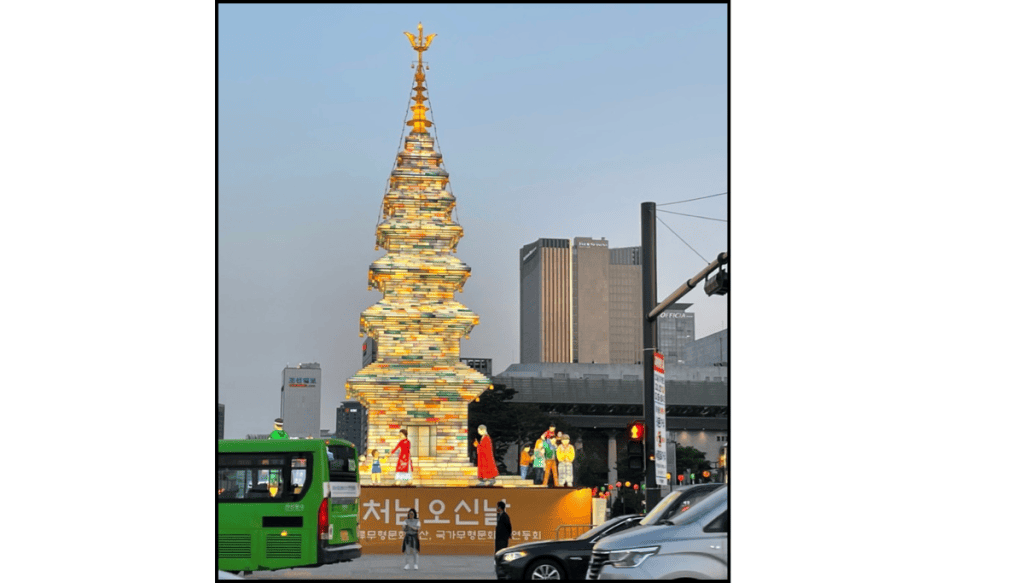
Because the displays are located in an open public space, visitors can walk through at their own pace, take photos, and move on as they wish.
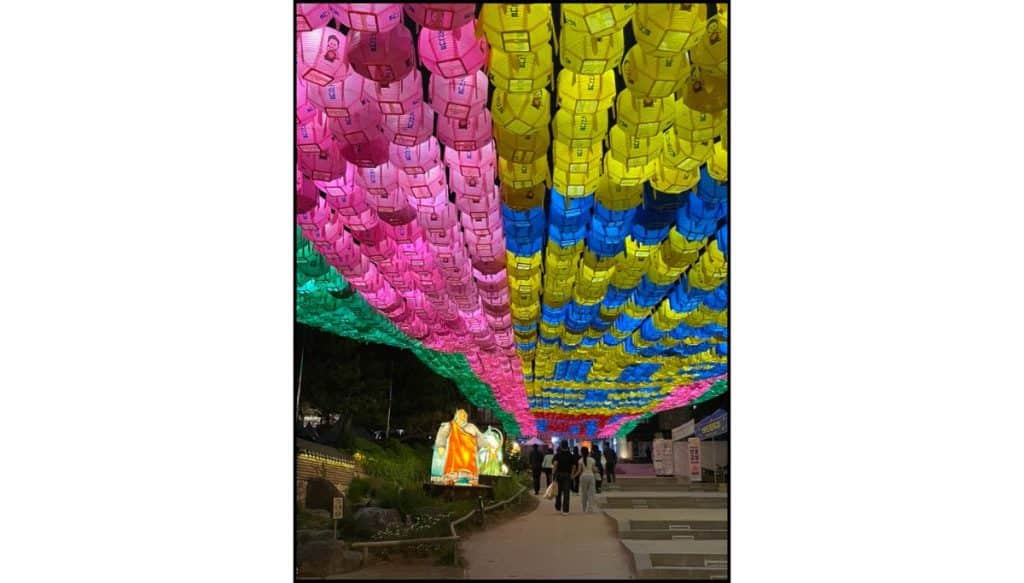
Lanterns are visible during the day, but the displays become more striking after dark when illuminated.
This area fits naturally into a day of sightseeing in central Seoul.
Many travelers combine a visit to Gwanghwamun Square with nearby palaces, museums, or dinner in the Jongno area, making it a practical option for experiencing the festival without restructuring an entire evening.
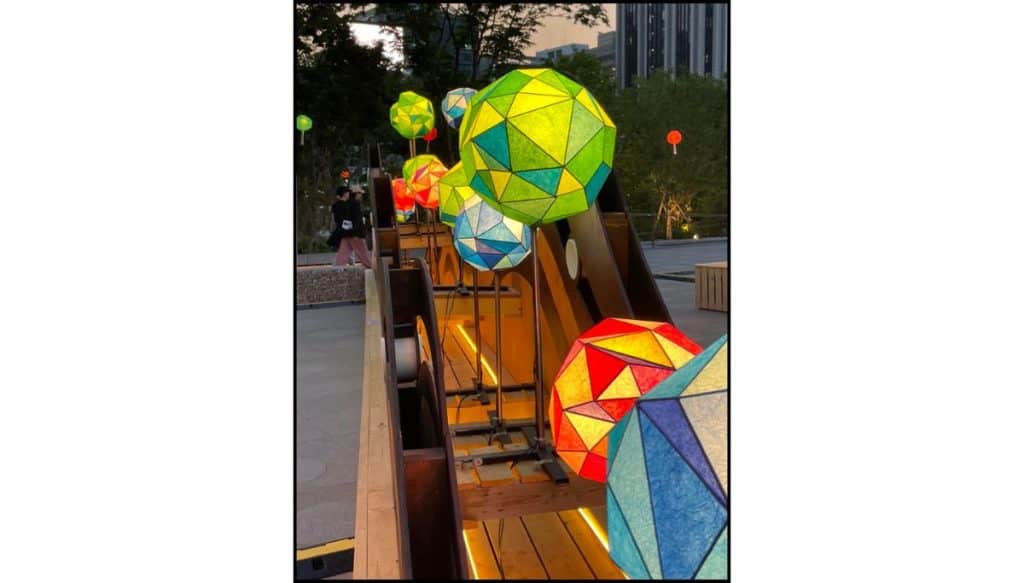
How to Get to Gwanghwamun Square
Gwanghwamun Square is centrally located and easily accessible by public transportation.
Subway:
Gwanghwamun Station (Line 5), Exit 2
Exit directly onto the square
Alternative subway option:
Gyeongbokgung Station (Line 3), Exit 6
About a 5 to 10 minute walk to the square.
Bongeunsa Temple
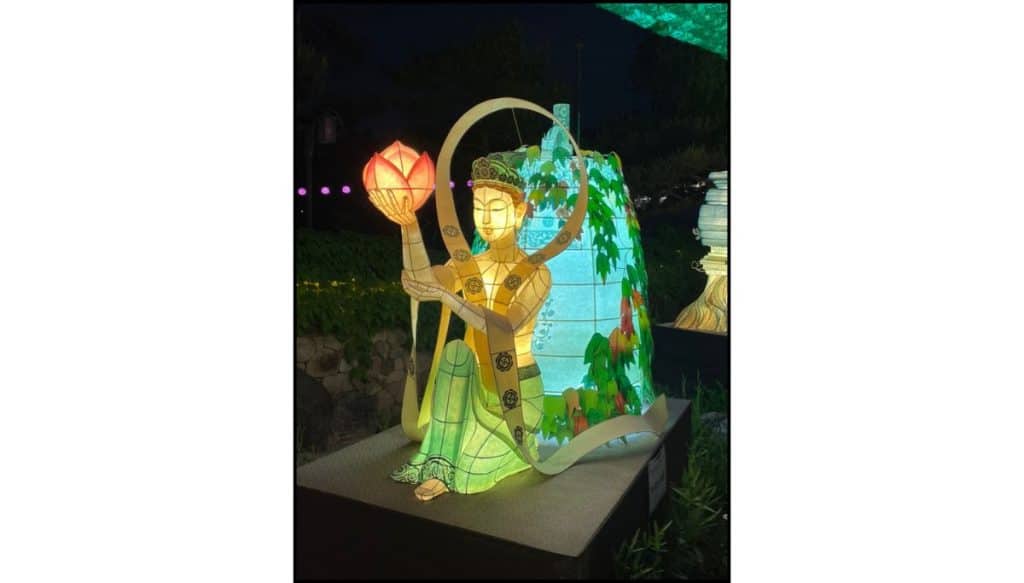
Located in Gangnam, Bongeunsa Temple is another place where visitors can see lotus lanterns during the Seoul Lotus Lantern Festival.
Although the temple sits next to one of Seoul’s busiest commercial areas, the atmosphere changes noticeably once you step inside the grounds.
Lanterns are visible right from the entrance and continue throughout the complex, creating an immediate contrast with the surrounding streets.
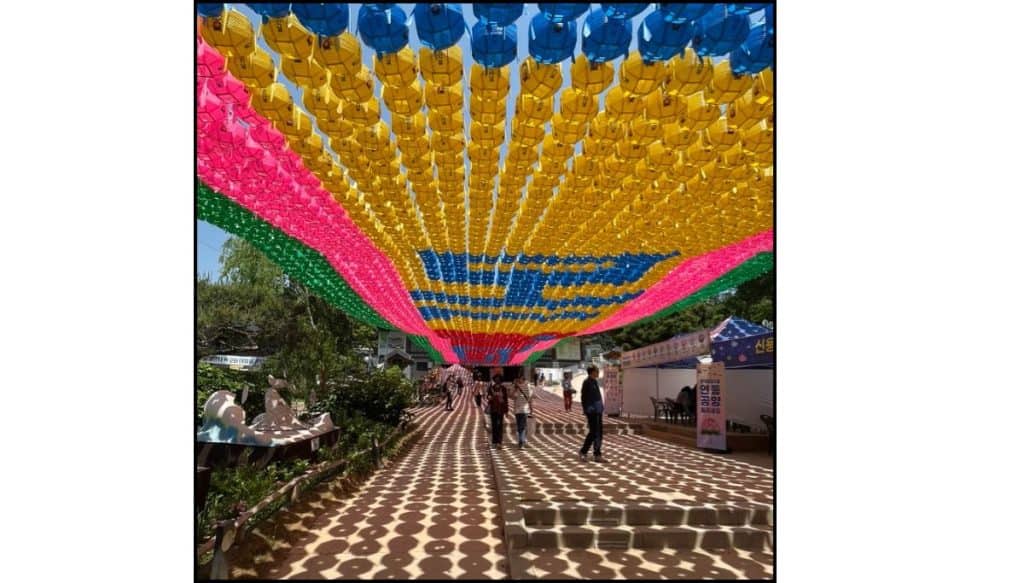
As you move deeper into the temple grounds, tree-lined paths and open courtyards create a buffer from the city.
Traffic noise fades, and the space feels incredibly peaceful from the pace of Gangnam, even though it sits just beyond the temple walls.
Bongeunsa Temple sits directly across from COEX Mall, making it easy to pair a visit with shopping, dining, or events in the area.
How to Get to Bongeunsa Temple
Bongeunsa Temple is easily accessible by subway and is directly across from the COEX complex in Gangnam.
Subway:
Bongeunsa Station (Line 9), Exit 1
Short walk to the temple entrance
Alternative subway option:
Samseong Station (Line 2), Exit 6
About a 10-minute walk, passing through the COEX area
Frequently Asked Questions
No. The Seoul Lotus Lantern Festival is free to attend. Temple lantern displays, public exhibitions, and the parade viewing areas do not require tickets.
Yes. All major festival components, including lantern displays at temples and public spaces, are free and open to the public
No. Lantern displays are typically set up several weeks before Buddha’s Birthday and remain on display through the holiday period. Many visitors see lanterns without being in Seoul on the exact date.
The parade draws very large crowds and requires patience and advance planning. Visitors who prefer quieter experiences may find temple lantern displays or public exhibitions on non-parade nights more comfortable.
Yes. Lanterns are visible during the day at temples and public spaces. They are illuminated after dark, which many visitors find more visually striking, but daytime visits are still worthwhile.
Yes. Lantern displays are family-friendly and attract visitors of all ages. Parade night may feel overwhelming for younger children due to crowd density, but temple and public displays are generally manageable
When visiting temples, dress modestly, speak quietly, and avoid touching lanterns or religious objects. Photography is generally allowed in outdoor areas, but visitors should be respectful of worshippers.
Final Thoughts
The Seoul Lotus Lantern Festival is not a single experience that looks the same for everyone.
Some visitors plan around parade night and enjoy the energy and scale of the celebration, while others prefer quieter evenings at temple lantern displays or casual walks through public spaces like Gwanghwamun Square.
Because lanterns are displayed across different parts of the city and over several weeks, there is flexibility in how you experience the festival.
You do not need to attend every event or follow a strict schedule to enjoy it.
Planning Your Seoul Trip
If you’re still putting your itinerary together, these guides can help: