
Wander S Korea may contain affiliate links. If you make a purchase using one of the links below, we may receive compensation at no extra cost to you. We only recommend products and services we use and trust. Read our disclaimer for more information.
Seoul has plenty of places to enjoy autumn foliage, but if you have extra time and want to get out of the city for a day, there are some great options within reach.
These fall foliage day trips from Seoul range from historic fortresses and botanical gardens to mountain parks and scenic islands.
Some are fairly straightforward to reach, while others take a little more planning. I’ll walk you through what makes each one worth considering, what the journey is actually like, and how to get there.
I’ll also point out organized tour options if you’d rather leave the transportation and logistics to someone else.
If you haven’t settled on a base in Seoul yet, our guide to the best areas to stay can help.
Stay connected from the moment you land. 👉Grab a Korea SIM card or Korea eSIM before your trip.
TL;DR: Eight fall foliage day trips from Seoul, from half-day fortress visits near the city to full-day mountain trips, with practical transit directions and tour options where available.
- Hwaseong Fortress, Suwon
- Nami Island
- Garden of Morning Calm
- Namhansanseong Fortress
- Hwadam Botanical Garden
- Gonjiam Ceramic Park (bonus stop)
- Seoraksan National Park
- Naejangsan National Park
|
Destination |
Travel Time from Seoul |
Walking / Effort |
Best For |
|
Suwon Hwaseong |
30 min–1 hr 10 min |
Moderate |
Fortress walls + city views |
|
Nami Island |
~1.5–2 hrs |
Easy |
Tree-lined paths, K-drama fans |
|
Garden of Morning Calm |
~1.5–2 hrs |
Easy |
Landscaped gardens |
|
Namhansanseong |
~1–1.5 hrs |
Moderate |
Historic walls + hiking |
|
Hwadam Forest |
~1.5 hrs |
Easy–moderate |
Forest paths, monorail option |
|
Gonjiam Ceramic Park |
~1.5 hrs |
Easy–moderate |
Walking paths + outdoor sculptures |
|
Seoraksan |
~3+ hrs |
Varies |
Rocky peaks + fall foliage |
|
Naejangsan |
~2.5–3 hrs |
Varies |
Vibrant fall color + hiking |
Hwaseong Fortress, Suwon
Suwon is one of the more accessible autumn day trips from Seoul, especially if you want to combine fall colors with Korean history.
Built in the late 18th century during the reign of King Jeongjo, Hwaseong Fortress surrounds the center of Suwon with nearly 6 km of stone and brick walls, gates, watchtowers, and other defensive structures.
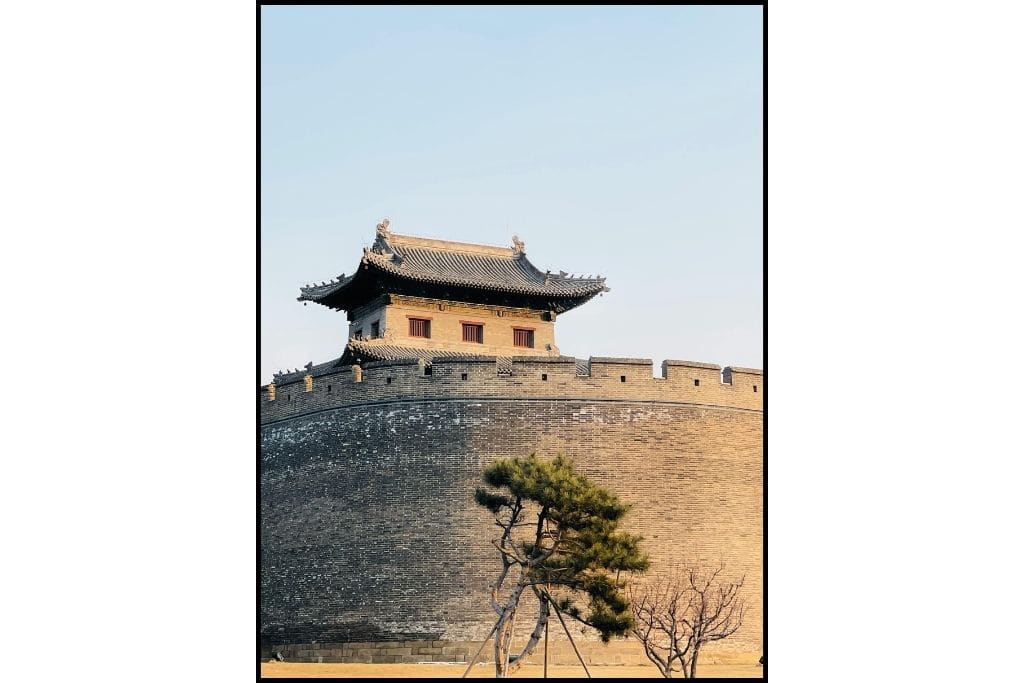
The fortress was designated a UNESCO World Heritage Site in 1997.
In autumn, the foliage around Paldal Mountain and along the fortress walls adds reds, oranges, and yellows to the historic setting.
You can walk sections of the wall for elevated views across Suwon, explore the major gates, and visit Hwaseong Haenggung, the temporary palace used by King Jeongjo during visits to the city.
If you don’t want to walk the entire fortress area, the Hwaseong Fortress Tourist Trolley connects several of the main sights and gives you another way to explore the area without covering everything on foot.
Getting There from Seoul:
By train or subway: From Seoul Station, take the ITX-Saemaeul to Suwon Station.
The ride takes about 30 minutes and costs around ₩4,800.
For a cheaper option, take Seoul Subway Line 1 from Seoul Station to Suwon Station, which takes about 55 to 60 minutes.
From Suwon Station, Bus 1007 or Bus 11 will take you to the Yeonmudae Tourist Information Center area in about 17 to 20 minutes.
Tap your T-money card to pay
Both drop you within a couple of minutes’ walk of the fortress.
The buses leave from different stops around Suwon Station, so use Naver Map when you arrive to find the correct boarding point.
Getting there by bus:
At Seoul Station, from the Seoul Station Bus Transfer Center, take Bus 8800 from Platform 6 and ride about 24 stops to the Yeonmudong/Segwanggyo Park area.
After you get off, walk a short distance to the nearby transfer stop, then take Bus 1007 or Bus 700-2 for the final leg to the fortress area.
The full trip takes about 1 hour 10 minutes under normal traffic conditions and costs around ₩3,500.
Hwaseong Fortress Tours
Most people visit Hwaseong Fortress during the day, but the illuminated walls and gates give it a very different feel after dark.
If you’d rather join a guided visit than plan the route yourself, the Hwaseong Fortress Tour from Seoul covers the main gates and walls with a guide, and the Hwaseong Fortress Night Tour from Seoul focuses on the fortress after dark.
Nami Island
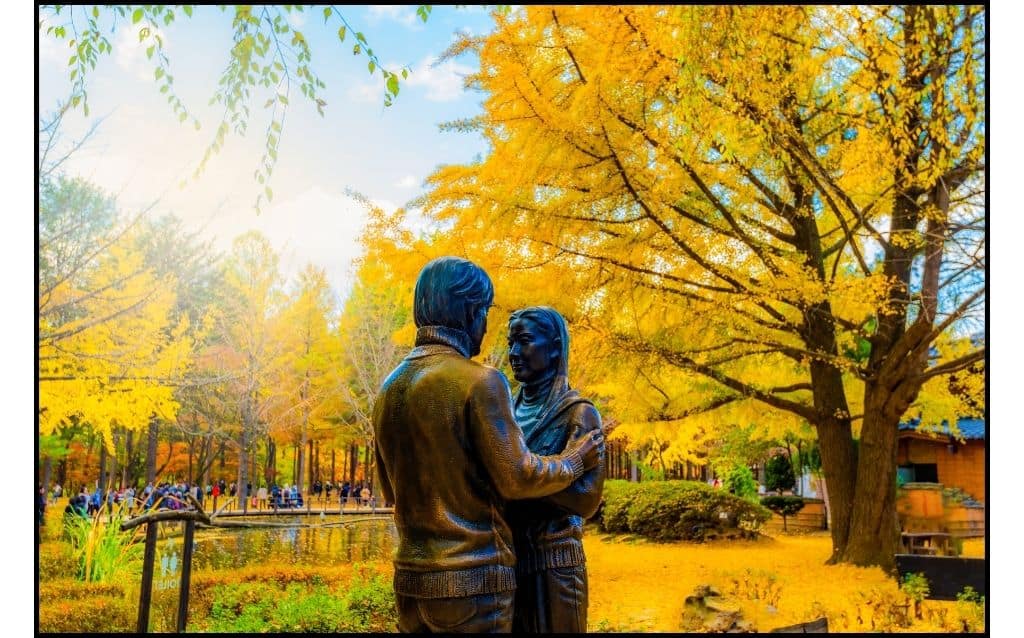
Nami Island is one of the most recognizable fall color day trips from Seoul, especially for K-drama fans.
The island became internationally famous after appearing in the 2002 drama Winter Sonata. Fans still visit its filming locations today.
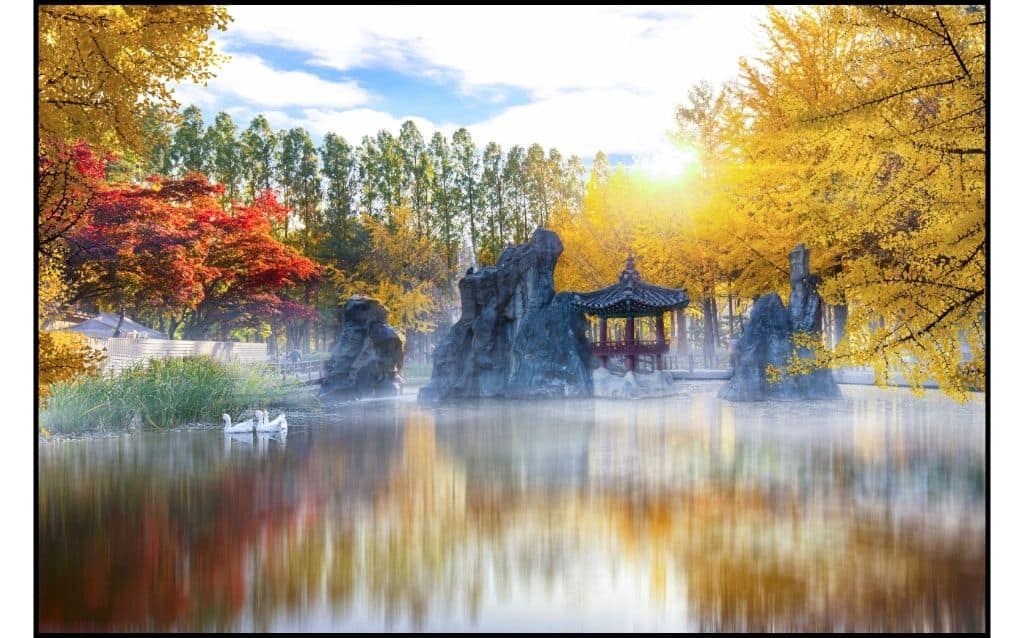
In fall, the long tree-lined paths are the main attraction.
Metasequoia Lane is one of Nami’s best-known sights, while its ginkgo trees turn bright yellow later in the season.
Maples and other trees add red and orange throughout the island, making it a place where you can spend a few hours walking, taking photos, stopping at cafés, or renting a bike to explore more of the island.
Nami also leans heavily into its self-declared “Naminara Republic” theme.
It has its own flag, stamps, symbolic currency, and commemorative passports, while your regular admission ticket serves as your “visa.”
It’s all part of the tourism concept, not an actual independent country.
Getting there from Seoul:
By Train: Take the ITX-Cheongchun from Yongsan Station to Gapyeong Station.
From there, you can take Bus 10-4 to the Namiseom Terminal area or grab a taxi for the short ride to the wharf. From the wharf, take the ferry across to Nami Island.
Shuttle option: KKday offers a round-trip shuttle service from central Seoul to Nami Island, with pickups at Hongik University, Namsan, and Myeongdong stations.
These are transportation-only packages, so you still need to pay separately for the ferry and island admission, but allows for several hours of free time on the island before the return trip.
Nami Island Tours
If you’d rather not coordinate the ferry and bus connections yourself, a couple of guided tours pair Nami Island with a nearby stop.
The Nami Island, Alpaca World and Gangchon Rail Bike Tour from Seoul is the better pick if you’ve got kids along or just want to see the alpacas.
The Nami Island, Petite France with Rail Bike Day Tour From Seoul swaps the alpaca stop for Petite France, the small French-village-themed area nearby, if a photo stop sounds more appealing than animals.
Both include the Gangchon Rail Bike and transportation from Seoul.
Garden of Morning Calm
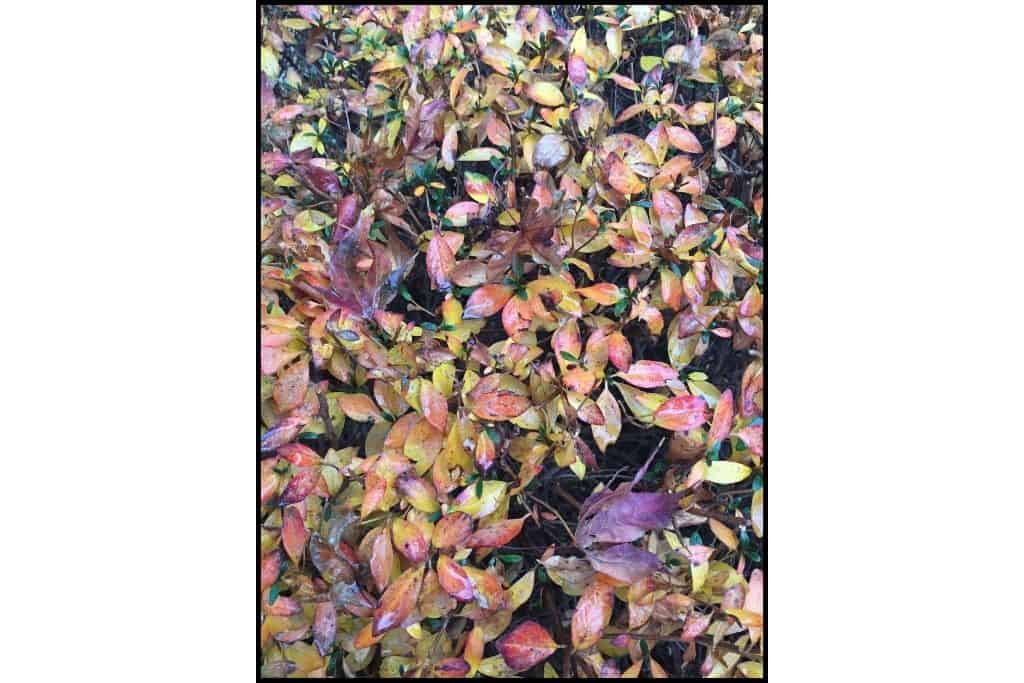
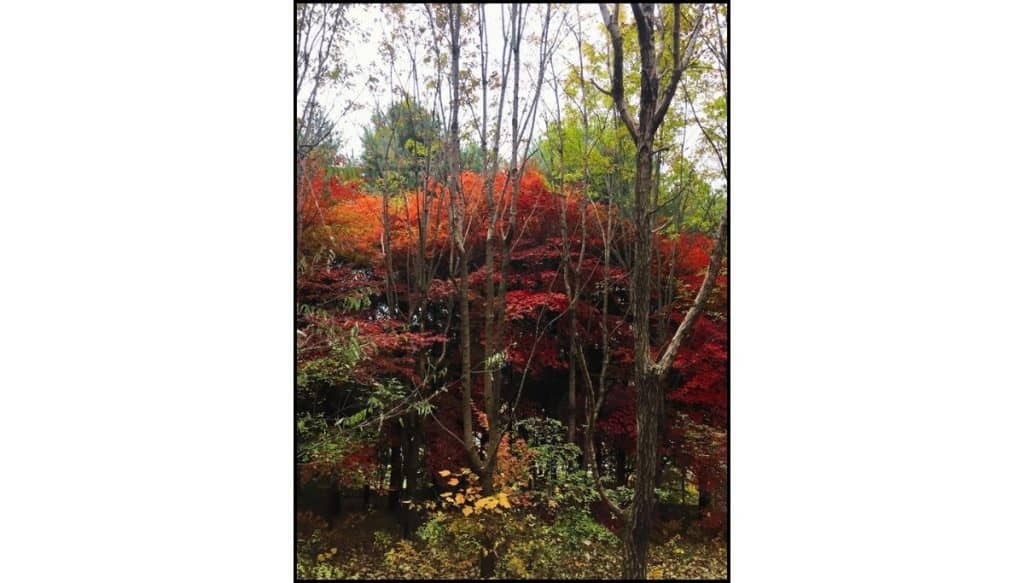
The Garden of Morning Calm is one of the most popular fall foliage spots near Seoul.
Located in Gapyeong against the backdrop of Chungnyeongsan Mountain, the Garden of Morning Calm covers roughly 330,000 square meters (~ 85 acres) and includes 20 themed gardens with more than 5,000 plant species.
The walking paths connect very different spaces, from traditional Korean-style gardens and ponds to wooded areas, flower gardens, bridges, and open scenic areas.
The walk from the parking area to the garden entrance is lined with food and snack stalls, so you may be tempted to grab something before you even get inside.
Once you enter the garden, you can also eat and take a break at the Korean restaurant and the café.
I went in winter for the famous annual Starlight Festival, so most of my visit was after dark when the trees and paths were illuminated.
The garden still felt much larger than I expected. As impressive as the light displays were, they made me want to come back and see the gardens properly in daylight.
I’d plan on at least a couple of hours if you want time to wander without rushing.
During peak foliage season, popular photo spots can also have short waits, especially when everyone is after the same view.
Getting there from Seoul:
The easiest way to think about the trip is to get yourself to Cheongpyeong Station first, then travel the final stretch to the garden.
By train: Take the ITX-Cheongchun from Yongsan or Cheongnyangni Station to Cheongpyeong Station. You can also take the Gyeongchun Line subway to Cheongpyeong.
From Cheongpyeong Station:
You have a few options
- The local Bus 30-6 runs to the Garden of Morning Calm. Service is limited, so check the current schedule before relying on it.
2. Another option is the Gapyeong City Tour Bus, which connects Cheongpyeong Station and Cheongpyeong Terminal with the Garden of Morning Calm and other attractions around Gapyeong.
The one-day pass currently costs ₩8,000 for adults and allows unlimited rides throughout the day. The City Tour Bus does not operate on Wednesdays.
3. There is also a taxi stand outside Cheongpyeong Station. A taxi to the garden takes about 20 minutes.
From Seoul by Intercity Bus:
You can also take a bus from Dong Seoul Bus Terminal or the Cheongnyangni Transfer Center to Cheongpyeong Terminal, then continue to the garden by local bus, City Tour Bus, or taxi.
Because schedules can change, I recommend checking the Garden of Morning Calm’s official transportation page before your trip for the latest bus and City Tour Bus times.
Garden of the Monring Calm Tours:
If coordinating the trains and local buses doesn’t appeal to you, there are organized day tours from Seoul instead.
The Day Trip to Nami Island with The Garden of Morning Calm covers both stops without adding extra activities to the day.
If you’d like a rail bike ride worked in too, the Day Trip to Nami Island with Rail bike and The Garden of Morning Calm adds that as a third stop.
The rail bike isn’t really my thing, but it’s a popular add-on if that sounds fun to you.
Check the itinerary before booking, since the number of included stops will affect how much time you actually spend at the garden.
Namhansanseong Fortress
Located just outside Seoul, in Gwangju, Gyeonggi-do, Namhansanseong Fortress is a UNESCO World Heritage Site with more than 12 kilometers of stone fortification walls surrounding a much larger historic area than you might expect.
Most visitors arriving by bus get off around Sanseong Rotary, where you’ll find a small village with restaurants and cafés.
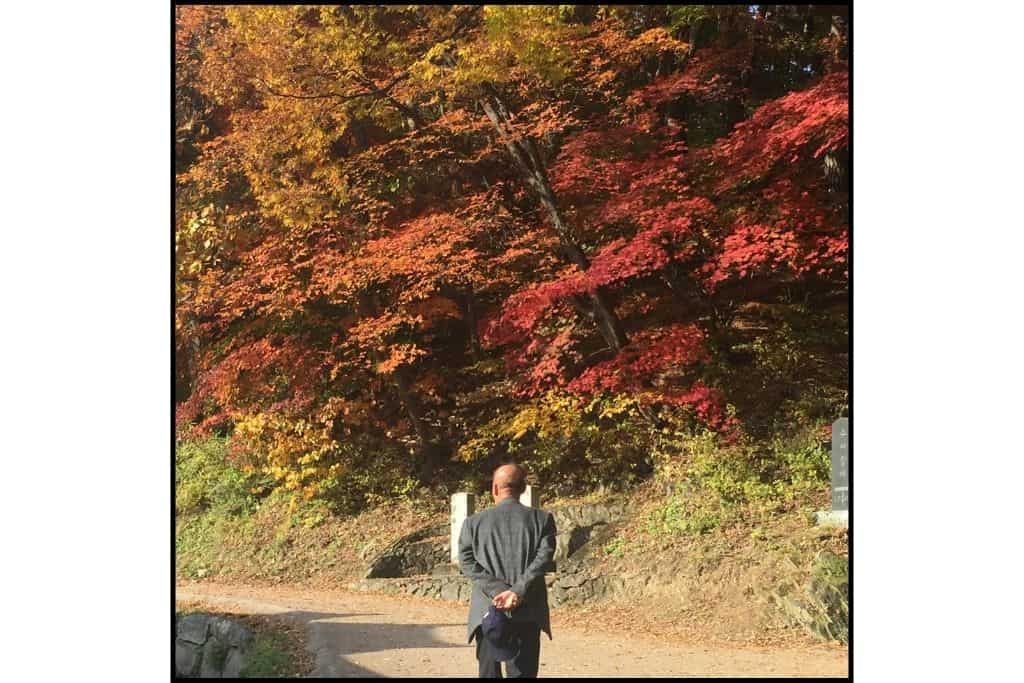
From this central area, walking routes branch out toward the fortress walls, gates, temples, wooded trails, and viewpoints.
Within the fortress walls, you are surrounded by red, orange, and gold foliage.
On a clear day, from the West Gate, you can look back toward Seoul and easily spot Lotte World Tower rising over Jamsil.
You don’t need to walk the entire fortress wall to enjoy Namhansanseong. Several routes vary in length, with some following paved paths alongside the walls and others continuing through wooded areas.
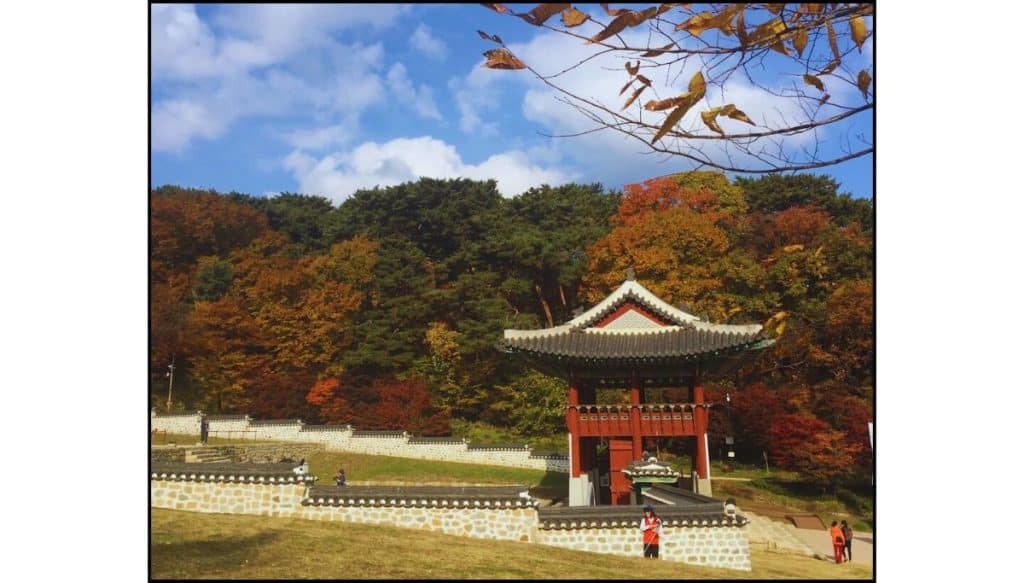
For more, our Hidden Gem Hikes guide also covers Namhansanseong. We’d suggest Route 1, the most popular option there.
The village makes it easy to stop for lunch or coffee before you start walking or recharge afterward, so you don’t need to treat this like an isolated mountain hike where you have to bring everything with you.
Namhansanseong is extremely popular during peak foliage season, especially on weekends.
Traffic on the road up can slow down, and buses back down can fill up quickly later in the day, so arriving earlier can make the trip much easier.
My first visit to Namhansanseong was a little overwhelming.
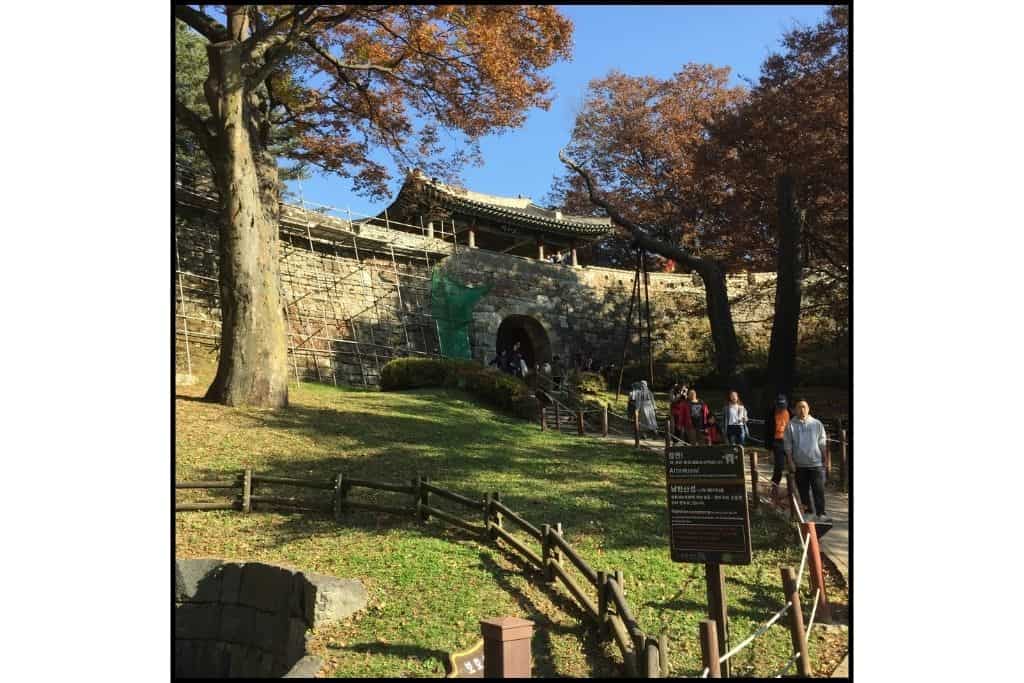
I explored some of the fortress paths on my own, stopped for lunch, and then took the bus back down without really getting a good sense of the area.
The second time, a local woman started talking to me on the bus and invited me to join her hike.
When traffic up the mountain came to a standstill, she suggested we get off, so we walked along the side of the road to the North Gate and continued from there.
That visit also taught me to allow extra time during peak fall weekends.
Traffic can slow the trip up considerably, and getting back down may involve waiting through a long line for the bus.
Getting There from Seoul:
Take Line 8 to Sanseong Station, Exit 2. Walk straight for about 100 meters to the bus stop ahead.
From there, take Bus 9, 9-1, or 52 to the Namhansanseong bus stop. Bus 9 runs more frequently, while 9-1 and 52 are typically faster but less frequent.
After getting off the bus, walk about 30 meters back in the direction the bus came from to reach Sanseong Rotary.
This is the main starting area for many of the walking routes, with signs pointing toward the North Gate, Temporary Palace, and other parts of the fortress.
Alternative: You can also take Line 8 to Namhansanseong Station, Exit 1, then walk about 310 meters to the bus stop for Bus 9.
The bus ride takes around 24 minutes, so Sanseong Station is generally the more convenient option.
A taxi from Sanseong Station takes around 10 to 15 minutes in light traffic.
During peak autumn foliage season, it may not save you any time because taxis and buses use the same road up the mountain.
Namhansanseong Fortress Tour:
If you’d rather not handle the bus connections yourself, there’s a guided option that includes a stop here. The Hwadam Botanic Garden and Namhansanseong and Folk Village Trip is really more of a Hwadam-focused day out, but it does stop at Namhansanseong along the way, along with the Korean Folk Village in Yongin.
Hwadam Botanical Garden
Located in Gwangju, Gyeonggi-do, Hwadam Sup is a large private arboretum with 16 themed gardens and around 4,000 plant species spread through wooded hills.
Hwadam Botanical Garden wasn’t even on my radar in 2019 until one of the teachers I worked with suggested it and helped me buy a ticket.
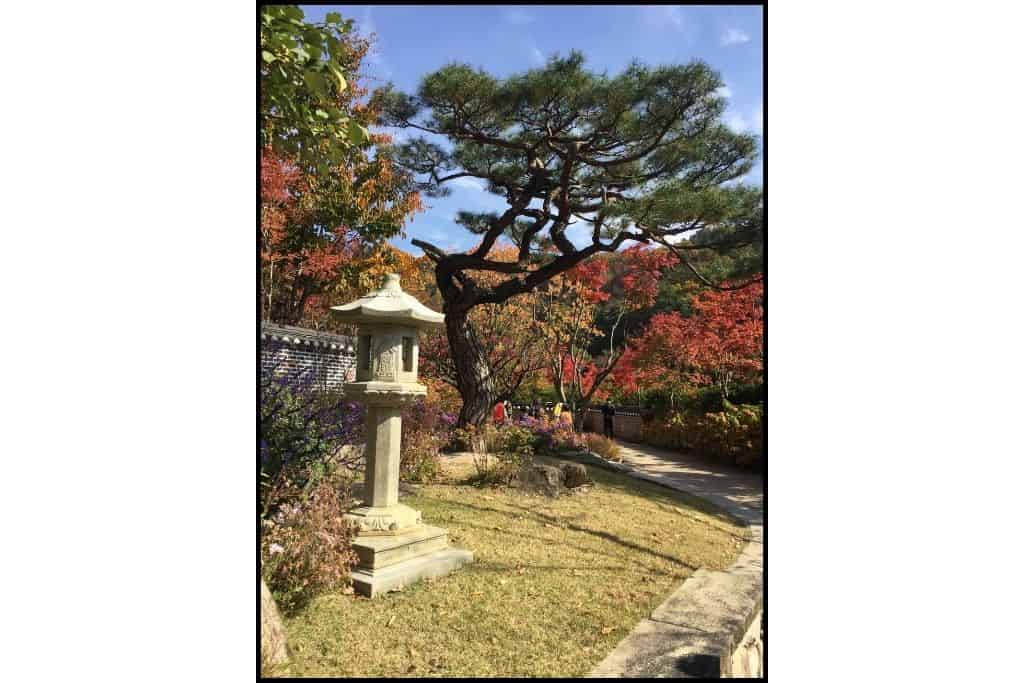
At the time, it still felt like a bit of a hidden gem. These days, the secret is definitely out, and you’ll even find organized fall color tours from Seoul.
Plan on giving yourself a few hours to wander through Hwadam Forest.
The walking paths lead through different garden areas, with the scenery shifting between forested sections, landscaped gardens, ponds, streams, and viewpoints.
The official site estimates about two hours to see the entire arboretum on foot, but I’d give yourself more time if you want to stop for photos, take breaks, or explore at a slower pace.
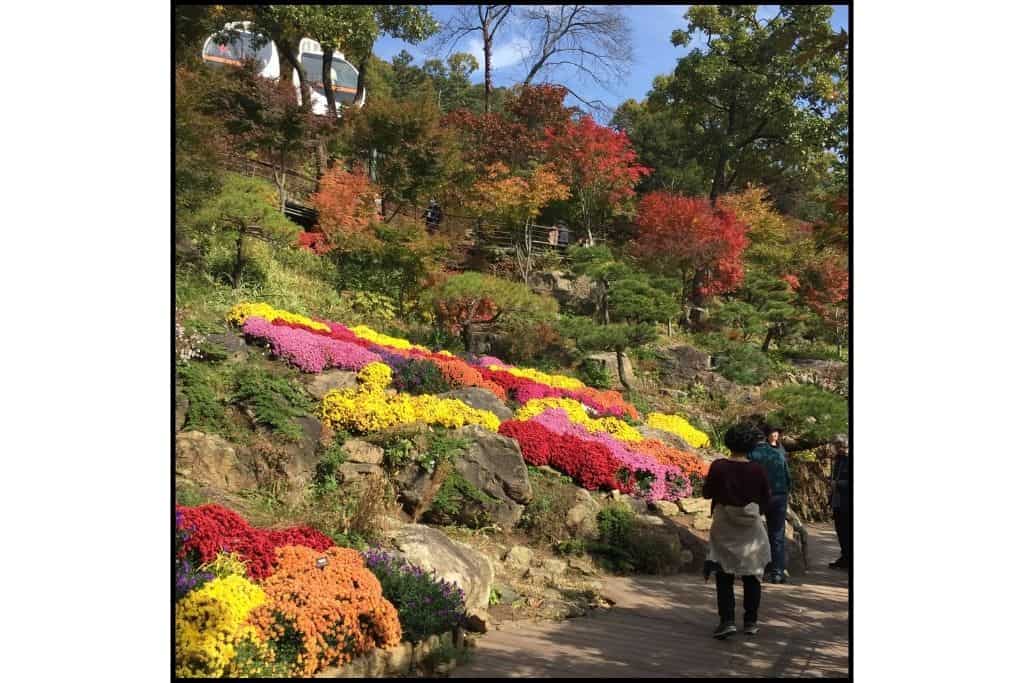
There is a café and restaurants near the entrance, so it’s easy to stop for coffee or have a meal before or after walking through the gardens.
The monorail runs through part of the property and is especially popular in autumn.
Tickets are separate from admission, and you can choose between shorter sections or the full loop.
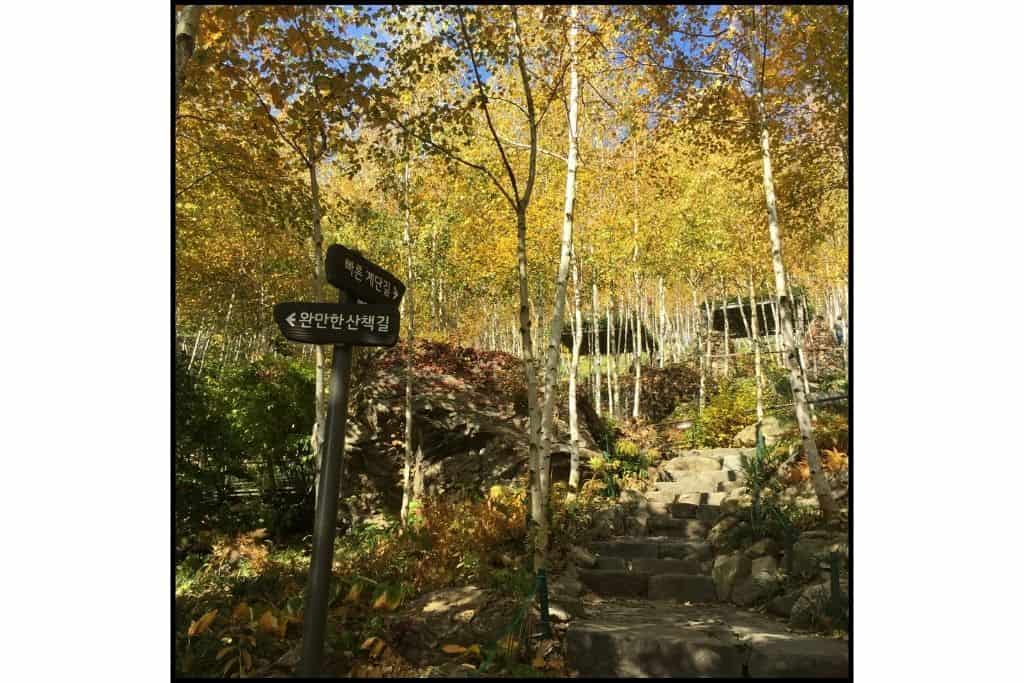
Tickets for Foreign Visitors
Foreign visitors cannot use the online ticket system because they do not have a Korean phone number or a Korean bank account.
However, they can buy one admission ticket on site by showing a valid passport or other physical proof of foreign citizenship.
If you plan to ride the monorail, I recommend getting that ticket when you buy your park ticket.
Monorail times sell out during peak autumn season. When I visited, the next available ride wasn’t until late afternoon.
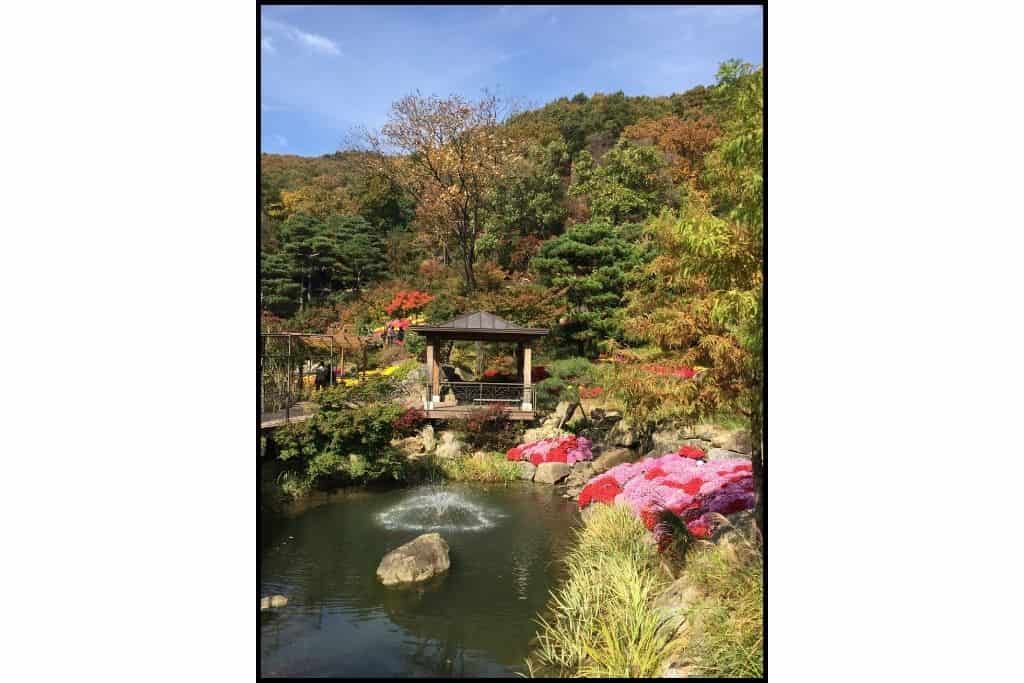
Getting There from Seoul:
By subway: Take the Shinbundang Line to Pangyo Station, then transfer to the Gyeonggang Line and continue to Gonjiam Station.
From Gonjiam Station, you can take Gwangju Bus 9 toward Hwadam Sup or take a taxi for the final leg. A taxi takes roughly 10 minutes.
By bus: From Gangbyeon Station, take Bus 1113-1 or 500-2 toward Gonjiam. From the Jamsil Metropolitan Transfer Center, take Bus 500-1. Once you reach Gonjiam Terminal, transfer to local Gwangju Bus 9 or take a taxi to Hwadam Sup.
The bus route from Seoul takes considerably longer once you include transfer and waiting time, so allow plenty of time for the trip.
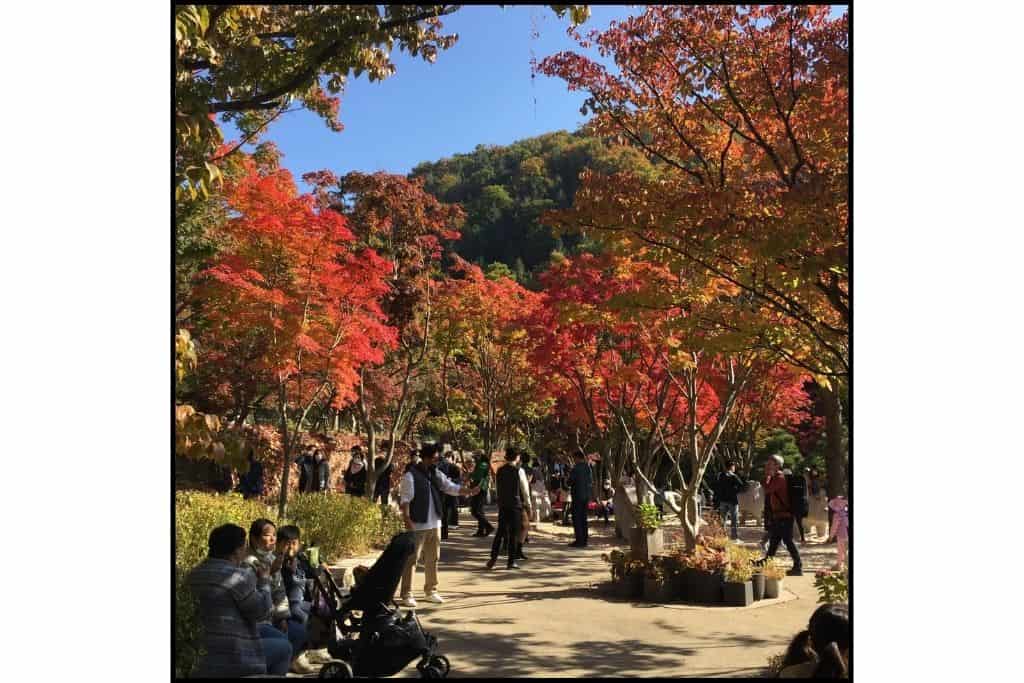
Hwadam Botanical Garden Tour:
If you’d rather skip the subway and bus transfers, the Hwadam Botanic Garden and Namhansanseong and Folk Village Trip combines a visit here with stops at Namhansanseong and the Korean Folk Village in Yongin.
Bonus Fall Color Spot: Gwangju Gonjiam Ceramic Park (광주 곤지암도자공원)
Gwangju Gonjiam Ceramic Park is one of the places on this list I know best.
I lived nearby and visited at least once a week for well over a year.
I went there when I needed to get out of the house, walk, and disappear into the trees for a while.
It was my escape into nature. I was lucky enough to see a deer and pheasants in the wooded areas!
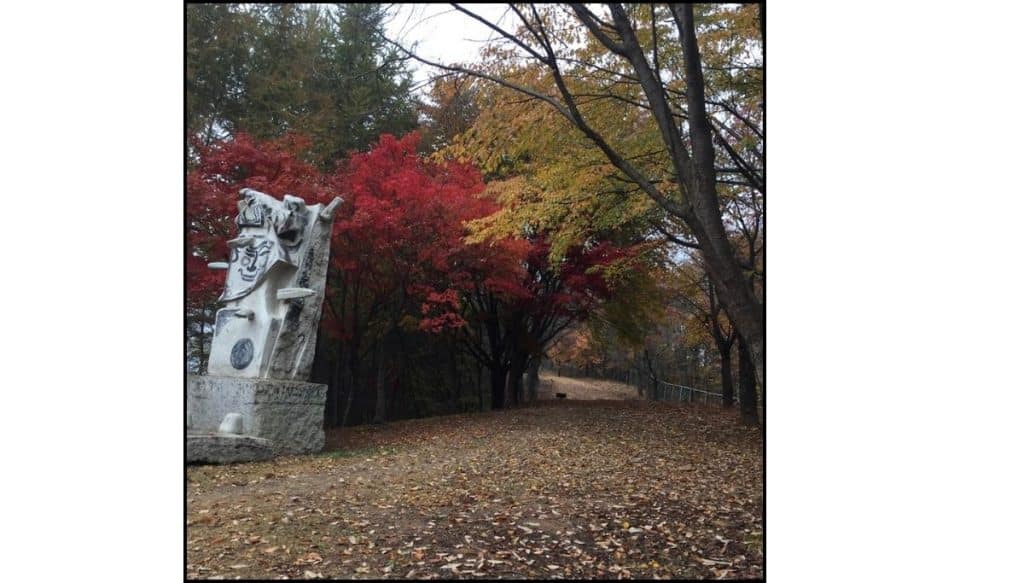
Most visitors tend to stay around the lower picnic areas near the museum, where the jeongjas (traditional-style pavilions) can get busy.
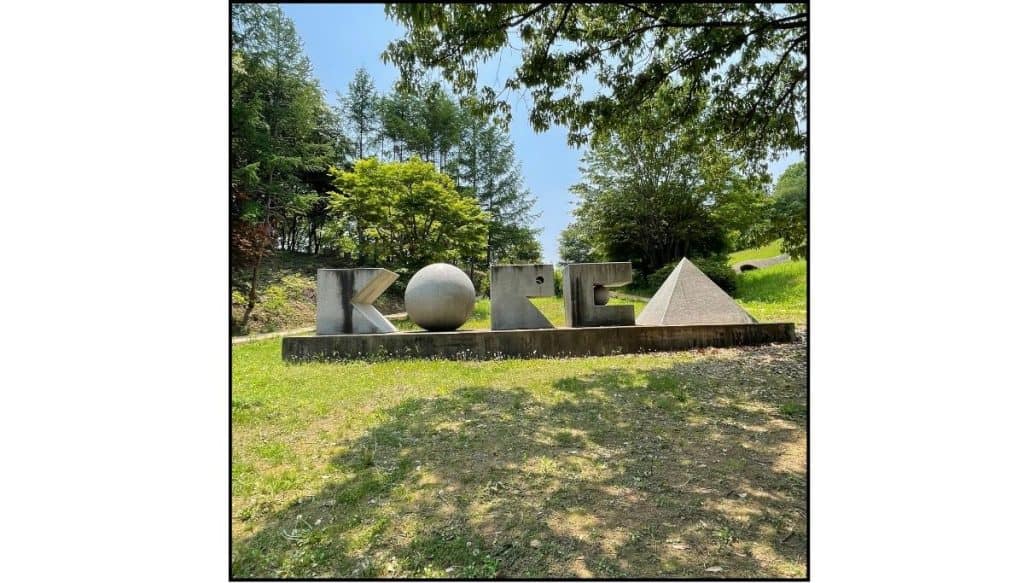
Keep walking uphill along the path to discover the sculptures, small side trails, and quieter areas to explore.
There is enough uphill walking to warm you up and make it feel like you got some exercise.
A Good add-on to Hwadam Sup or an alternative if sold out
Gonjiam Ceramic Park is also worth keeping in mind if you plan to visit the nearby Hwadam Botanic Garden.
If you visit Hwadam Botanic Garden, you can consider adding the ceramic park for the same day.
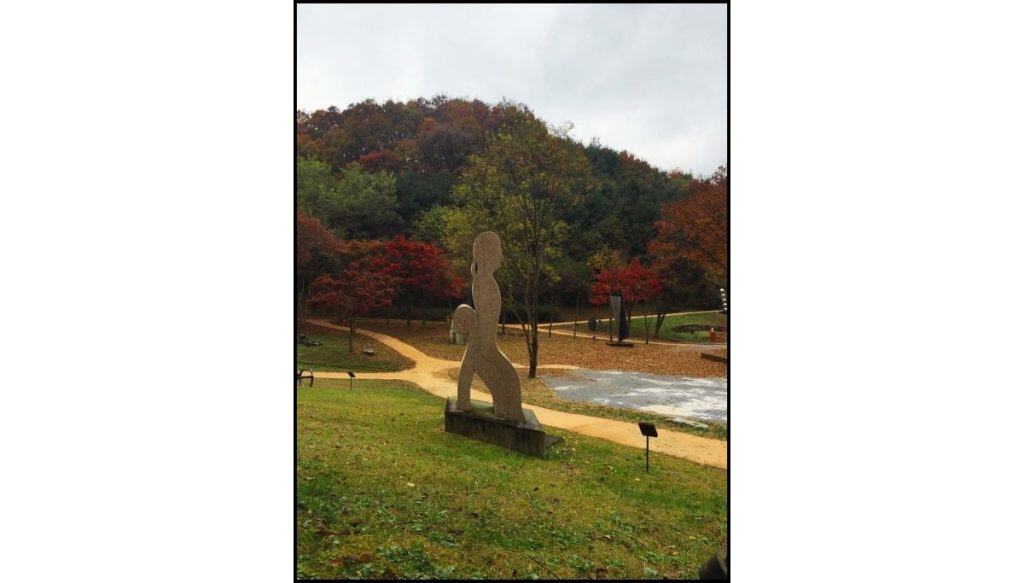
If for some reason the tickets are sold out, consider heading over to the ceramic park while you’re out in the countryside before heading back to Seoul
While it’s not a substitute for Hwadam Botanic Garden, the park still has beautiful autumn foliage, walking paths, outdoor sculptures, and the ceramic museum.
Gyeonggi Ceramic Museum and the Park’s History
Before heading into the park, stop at the Gyeonggi Ceramic Museum near the entrance. The museum is closed on Mondays. Adult admission is only ₩3,000.
Gyeonggi Gwangju has a long connection to Korean ceramics.
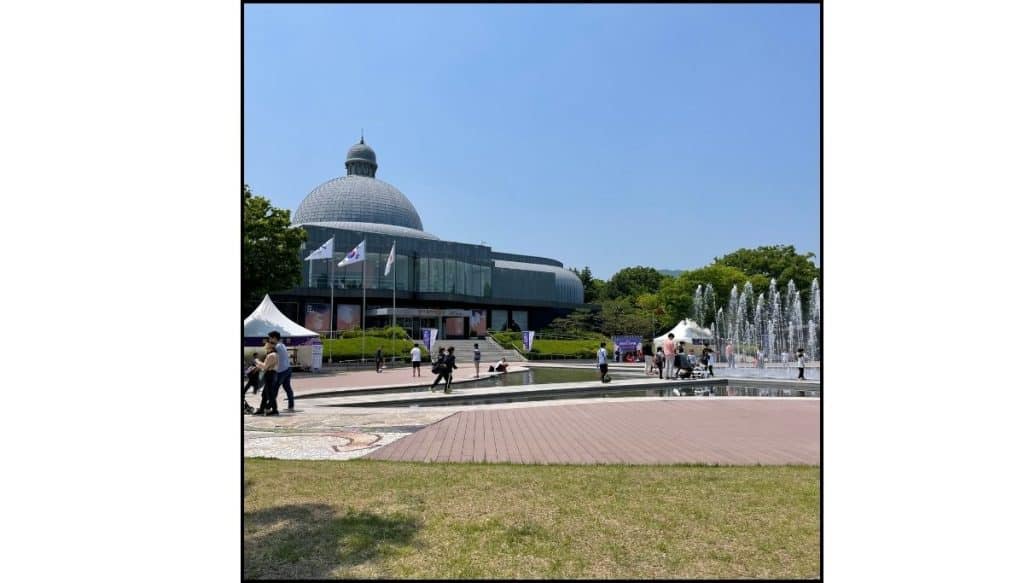
During the Joseon period, royal kilns in the area produced ceramics for the royal household for hundreds of years.
The museum covers Korean ceramic history, including celadon and white porcelain, while the surrounding park continues that connection through sculptures, ceramic art, and traditional kiln structures.
Getting There from Seoul:
By subway: Take the Shinbundang Line to Pangyo Station, then transfer to the Gyeonggang Line and continue to Gonjiam Station.
From Gonjiam Station, take Exit 2 and walk toward the main road to catch Bus 300.
The fare is about ₩1,650, and the bus drops you off across the street from the park.
It’s a short ride, only four stops, and takes about 7 minutes in light traffic.
There’s an E-mart convenience store at the bus stop. There is a cafe outside of the museum, but it is also closed on Monday
Check NAVER Map or KakaoMap for the correct stop and live bus information before boarding.
Seoraksan National Park
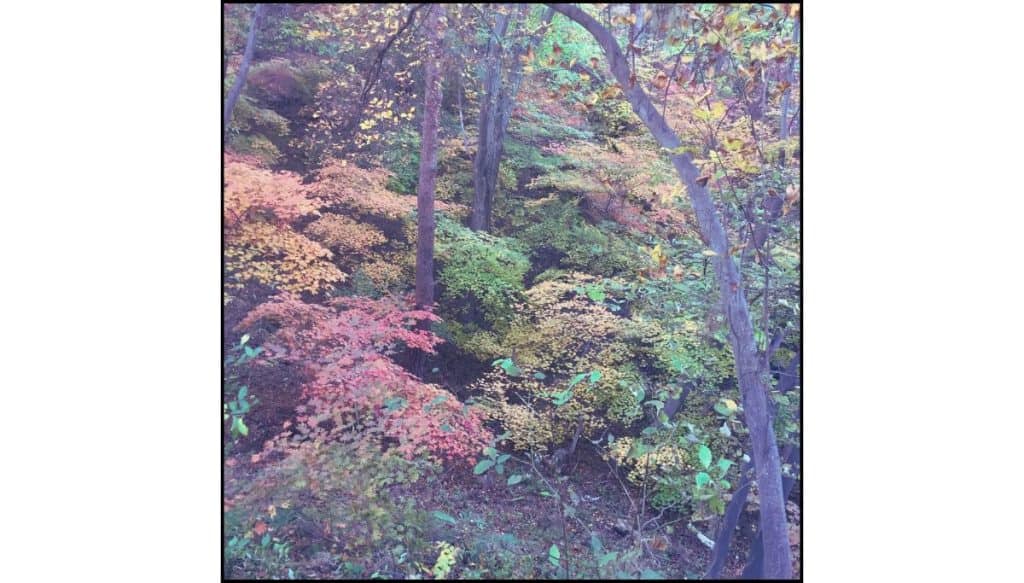
Seoraksan National Park is one of the first places in Korea to show autumn color, with rocky peaks, waterfalls, temples, and some of the country’s most dramatic mountain scenery.
I started by taking the Seorak Cable Car up for mountain views.
From the upper station, it’s a short 10-to-15-minute walk up a rocky path to Gwongeumseong Peak and the fortress ruins.
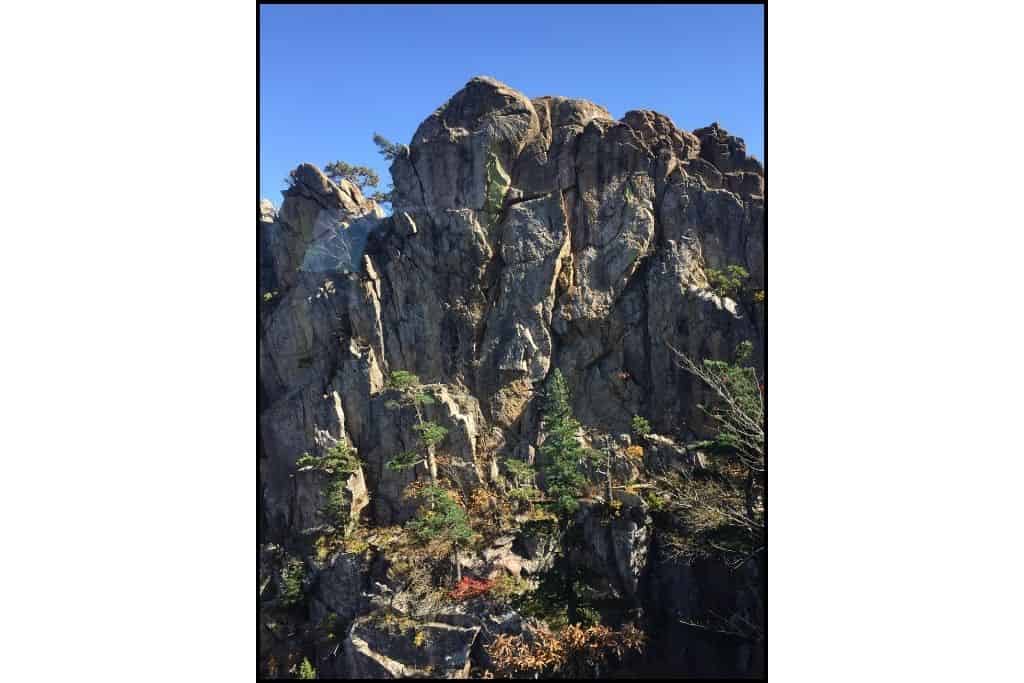
I came back down for lunch, then later explored a quieter trail leading to a waterfall.
The cable car was the busiest part of the park when I visited.
There can be a long line for the ride back down.
So if you are visiting on a group tour, keep an eye on the time and give yourself plenty of buffer before departure.
The other trails I explored had a steady flow of hikers, but they never felt especially crowded.
Getting There from Seoul:
Express buses run from Seoul Express Bus Terminal and Dong Seoul Terminal to Sokcho. The trip generally takes around 2½ to 3 hours, depending on traffic.
From Sokcho, take a local bus, 7 or 7-1, to the Seoraksan National Park entrance.
If you would rather skip coordinating the long-distance bus and local transportation yourself, one-day tours from Seoul also include transportation to Seoraksan.
Check the official Seoraksan National Park and cable car websites before your visit for current operating hours, cable car fees, closures, and other visitor information.
Seoraksan National Park Tours:
If you’d rather skip the long-distance bus and local transfer, one-day tours from Seoul also include transportation to Seoraksan.
The One-Day Tour for Stunning Mt. Seoraksan from Seoul covers just the mountain and cable car.
If you’d like to extend the day, the Seoraksan with Nami Island or Sinheungsa Temple Tour from Seoul lets you add either more time at Sinheungsa Temple, which is actually inside the park itself, or a stop at Nami Island, a completely different destination.
Naejangsan National Park
Naejangsan National Park is especially known for its deep red fall foliage, and the scenery starts well before you reach the main sights inside the park.
When I visited, our bus parked quite a distance from the entrance, so there was a fairly long walk before we really got into the park.
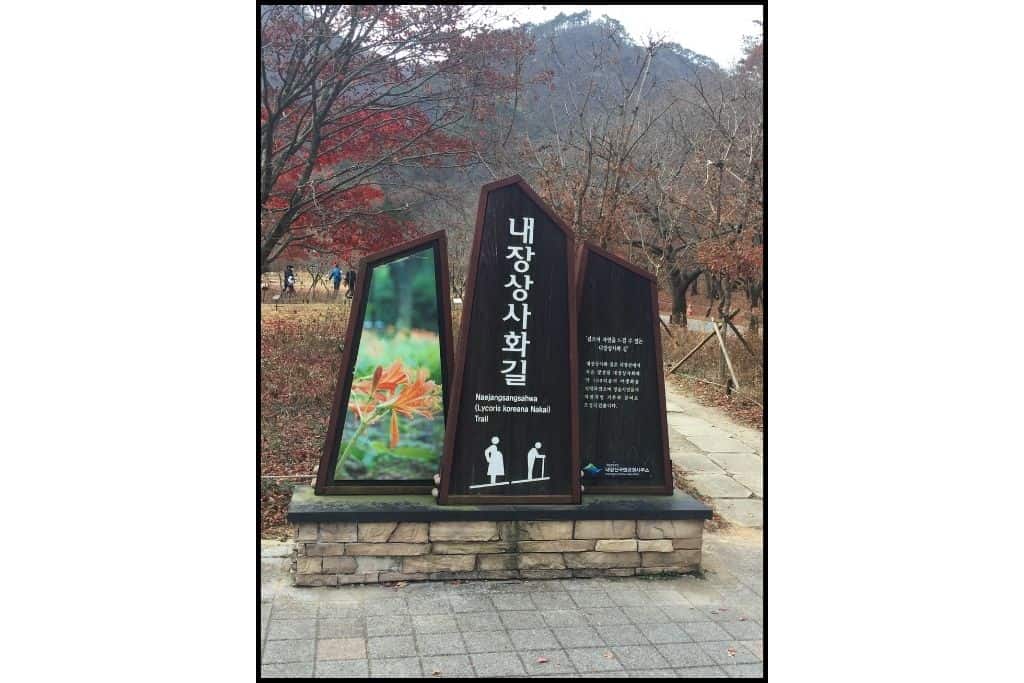
I actually enjoyed that part of the visit. The route was beautiful in autumn and gave me some of my favorite photos of the day
There is also a cable car that takes you higher into the park for mountain and foliage views.
I originally bought a one-way ticket because I thought I might hike back down.
Once I got to the top and saw the route, I decided it was more of a hike than I wanted to tackle that day, so I ended up buying a ticket for the ride back down.
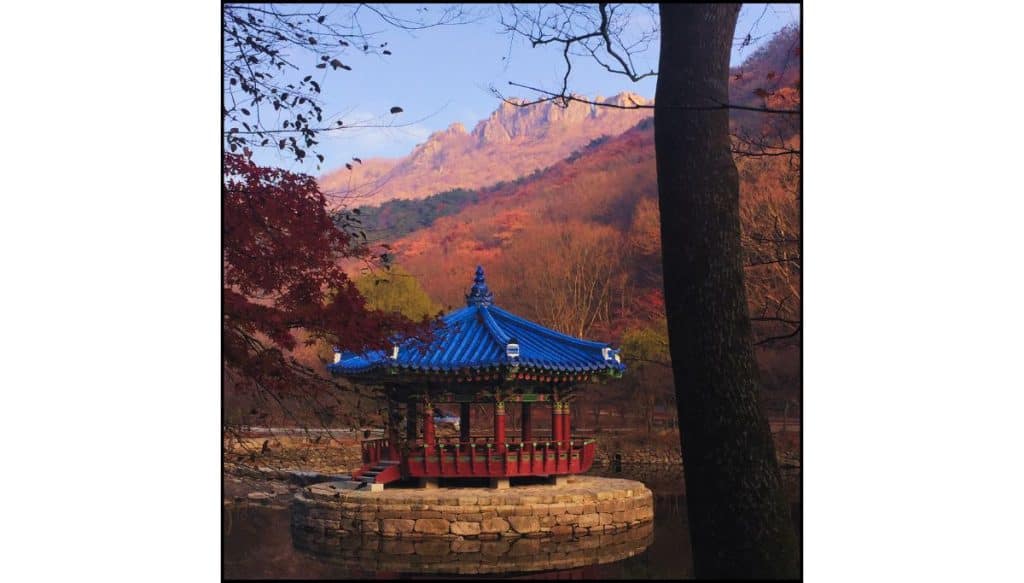
Unless you already know you want to hike down, I’d recommend buying a round-trip cable car ticket from the start.
It lets you enjoy the views without committing to a longer or more challenging descent than you expected.
Getting There from Seoul:
The most straightforward DIY route is to take the KTX from Seoul Station to Jeongeup Station, then continue to Naejangsan by local bus or taxi.
From Jeongeup Station, Bus 171 runs toward Naejangsan about every 30 minutes, with the ride taking roughly 35 to 40 minutes.
Have a T-money card ready to pay the fare.
If you just miss the bus, you may end up deciding whether to wait for the next one or take a taxi instead.
If you plan to take the KTX, I would reserve your ticket as soon as your travel date opens for booking. Early trains can sell out during peak foliage season.
Taking the KTX to Busan? Book your tickets in advance with Trip.com to reserve your seat.
Naejangsan National Park Tours:
The Naejangsan National Park Autumn Foliage One Day Tour runs from both Seoul and Busan, so it’s worth a look if you’d rather skip the KTX and local bus connection altogether.
FAQ
Fall weather can change quickly, especially from morning to afternoon. Wear layers you can add or remove, and bring a light jacket for cooler mornings and evenings. Comfortable walking shoes are also a good idea since many fall foliage spots involve hills, fortress paths, gardens, or uneven trails.
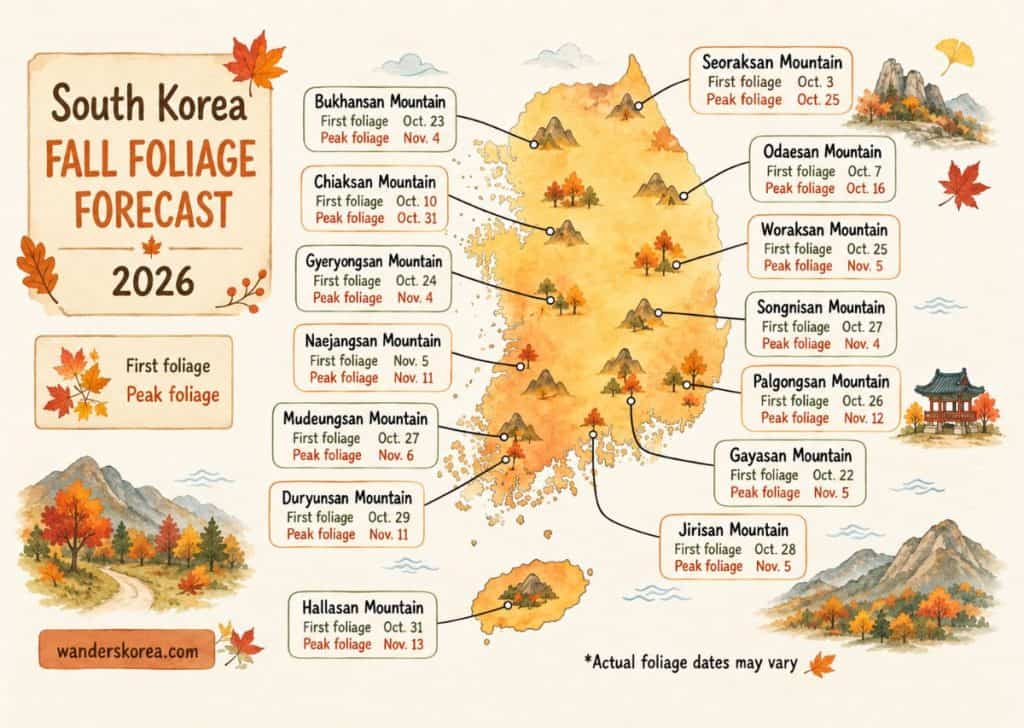
Peak foliage around Seoul and Gyeonggi-do is usually in late October into early November, but the exact timing changes each year depending on temperatures and elevation. Mountain areas such as Seoraksan usually change earlier than destinations closer to Seoul.
Yes, especially during peak foliage season and on weekends. Popular fall destinations in South Korea can get very busy once the leaves start changing. Visiting on a weekday or arriving earlier in the day can help, but you should still expect crowds during peak season.
Yes. While all of the places in this guide can be reached by public transportation, a tour can be more convenient for destinations with several transfers or for combining multiple attractions in one day.
Nami Island and Garden of Morning Calm have flat, well-marked paths with no real hiking. Gonjiam Ceramic Park is also easy if you stick to the lower picnic areas; the uphill sculpture trail there is optional. Suwon Hwaseong and Hwadam Forest offer moderate walking with shortcuts if you want to skip the harder sections.
Wrap Up
These eight day trips are a great way to see more of Korea’s autumn color without giving up your Seoul base.
Book transportation ahead where you can, especially for weekends during peak season.
Want more fall foliage spots closer to the city? Check out our full Seoul fall foliage guide.